
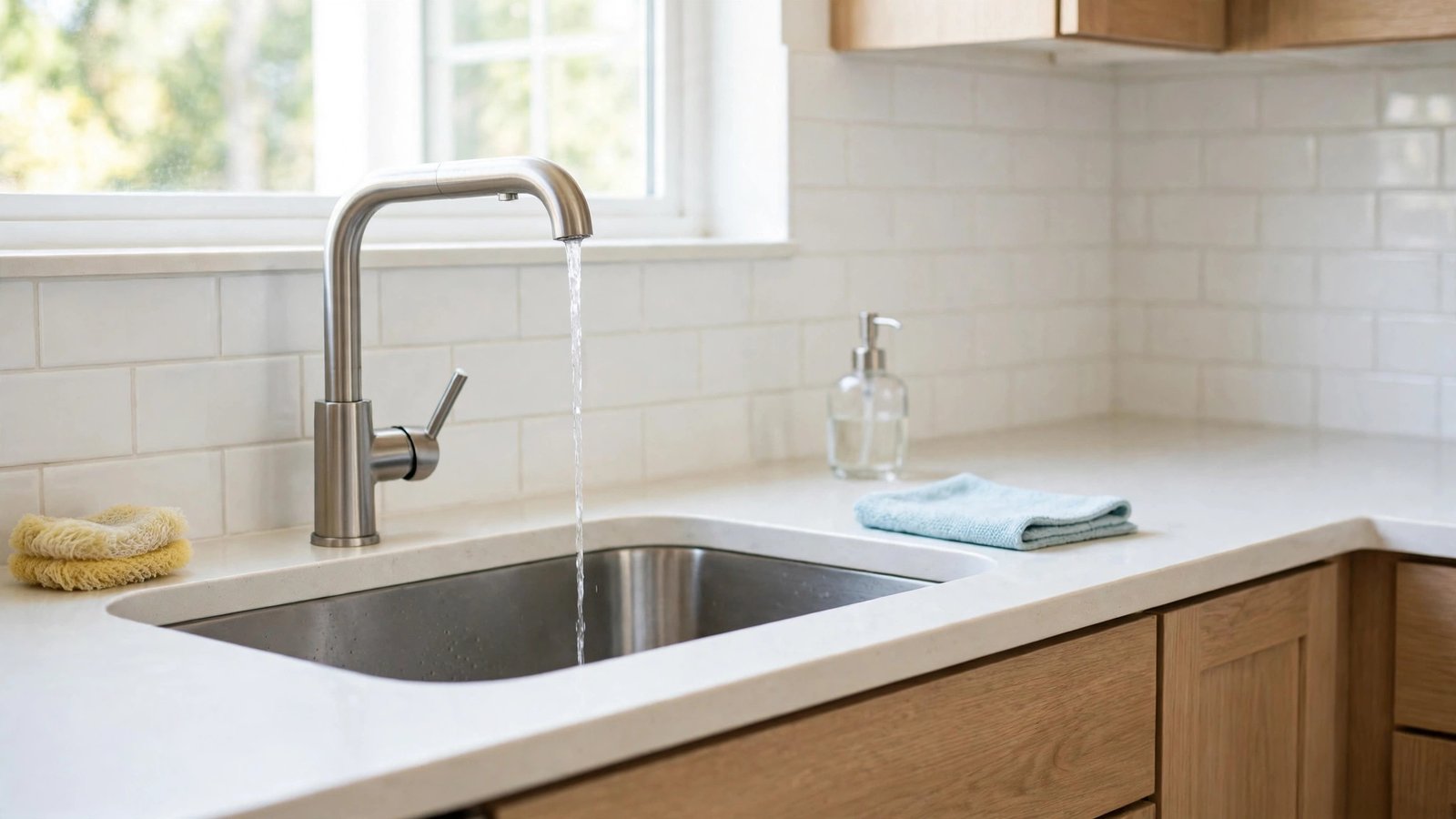
Start with the simplest question: is it just this faucet?
A kitchen faucet that has gone from a strong stream to a sad trickle is annoying, but it is also a useful clue. Before you take anything apart, run the other taps in the house. If every tap is weak, the problem is probably in your main supply, a pressure regulator, or a municipal issue — not in the faucet itself. If only the kitchen faucet is weak, the fault is almost certainly in that fixture, and it is usually fixable in under an hour.
That one check saves a lot of wasted work. Here are the causes, in the order worth checking them.
1. A clogged aerator — the cause most of the time
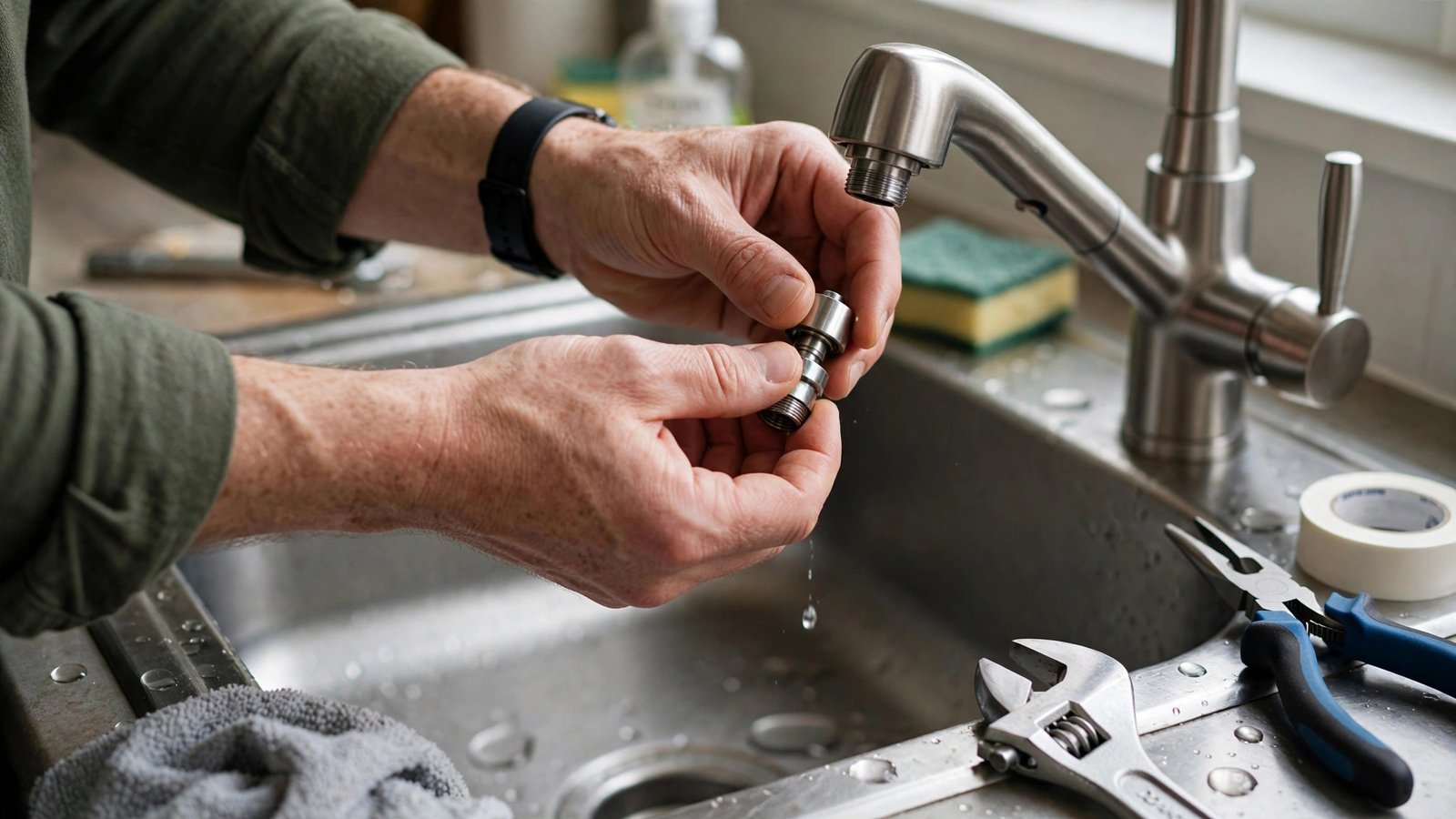
The aerator is the small mesh screen screwed into the tip of the faucet. Its job is to mix air into the water for a smooth, splash-free stream. Its side effect is that it catches every bit of sediment, limescale and debris in your water supply.
Unscrew it by hand — if it is stuck, wrap it in a cloth first so pliers do not scratch the finish, then turn counter-clockwise. Rinse it under running water, pick out visible grit with an old toothbrush, and soak it in white vinegar for 30 minutes if you see white mineral buildup. Reassemble and test. In hard-water areas, this alone restores full pressure surprisingly often.
If the aerator is cracked, corroded or missing its washer, replace it. Take the old one to the hardware store or note its size and thread type; aerators are inexpensive and universal replacements rarely fit perfectly without matching.
2. A shut-off valve that is not fully open
Under the kitchen sink, two shut-off valves feed the faucet — one hot, one cold. After any plumbing work, or after someone has bumped them while storing cleaning supplies, one valve can end up half-closed. Turn both fully counter-clockwise to open them, then test the faucet again.
3. Sediment in the supply lines
If the aerator was clean but pressure is still low, debris may be sitting deeper in the lines. Turn off both shut-off valves, disconnect the supply lines from the faucet (keep a bucket and towels ready), then point each line into the bucket and open its valve briefly to flush it out. If grit or discoloured water comes out, you have found the problem. Reconnect everything firmly before turning the water back on, and check for drips.
4. A worn-out cartridge
Modern single-handle faucets control flow and temperature with a cartridge inside the handle. When it wears out or gets clogged with mineral deposits, flow drops, the handle may feel stiff, or hot and cold may stop mixing properly.
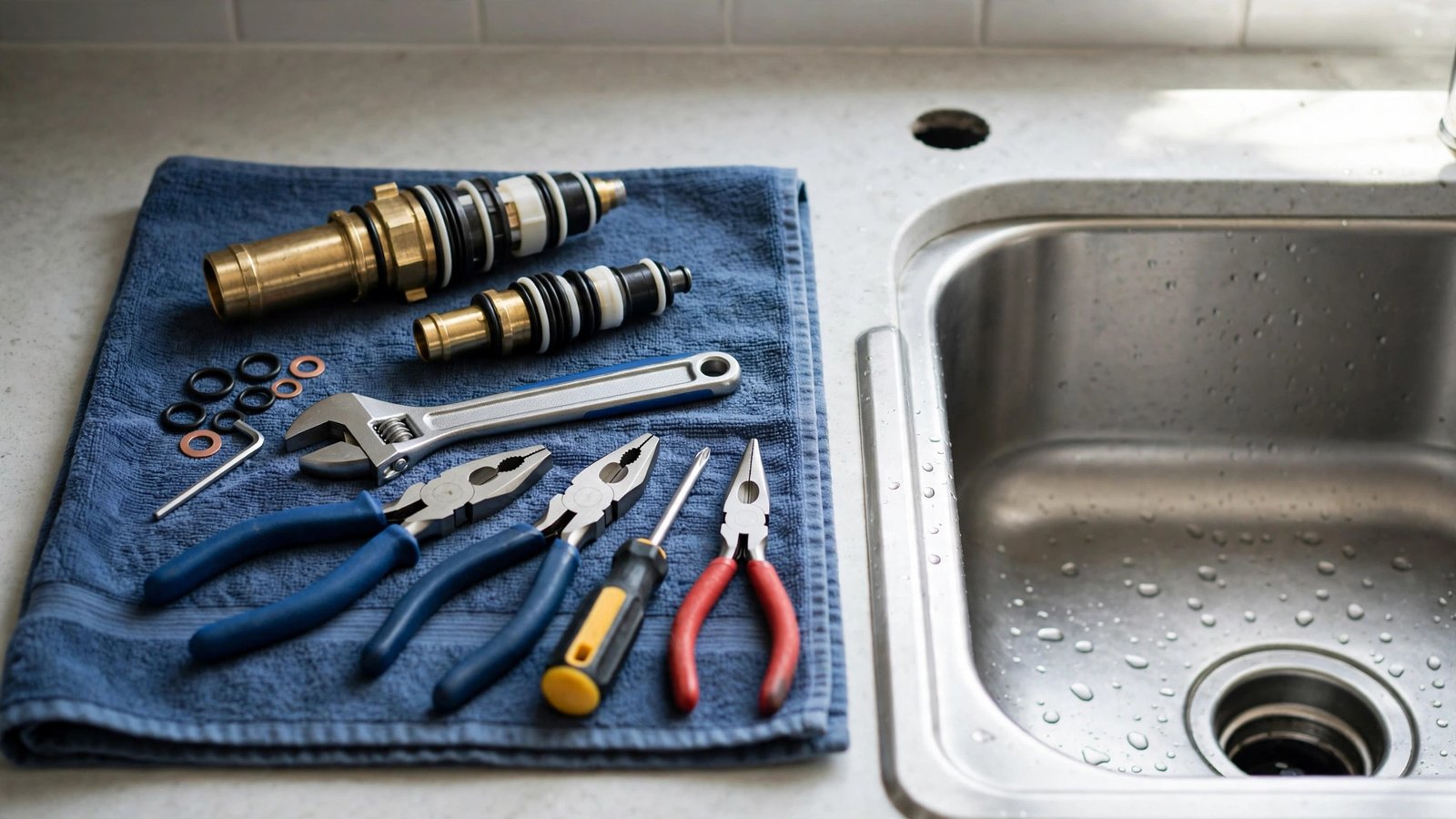
Replacing a cartridge is a moderate DIY job: shut off the water, remove the handle (usually one set screw hidden under a cap), pull the old cartridge out, and fit the matching replacement. The critical step is identification — cartridges are brand- and model-specific, so photograph the old one and check the faucet brand before buying. If you cannot identify it, a plumbing supply shop can usually match it from the photo.
5. Low pressure on one side only
If hot water is weak but cold is fine, or vice versa, the problem is on that side’s supply path. Check that side’s shut-off valve, flush that supply line, and check the water heater’s shut-off and outlet if the hot side is affected throughout the house. A water heater with heavy sediment buildup can restrict hot flow everywhere, and that is a separate maintenance job — flushing a water heater is straightforward, but follow the manufacturer’s instructions and never work on it while it is heating.
6. A failing pressure regulator
If every tap in the house has gradually lost pressure, and your neighbours have not, your home’s pressure regulator may be failing. This is a bell-shaped device on the main water line where it enters the house. A faulty regulator can also cause pressure that swings up and down, or a hammering noise in the pipes. Replacing a regulator is not a beginner job — it involves shutting off the main supply and working on the main line — so this is a call-a-plumber item.
7. A hidden leak
A leak somewhere in the system steals pressure before it reaches the tap. Warning signs include an unexplained jump in the water bill, a damp patch, the sound of running water when nothing is on, or a water meter that creeps forward with all taps closed. If you suspect a leak, turn off the main supply and call a plumber promptly; a small leak can become serious water damage quickly.
When to stop and call a plumber
Call a professional if pressure drops suddenly across the whole house, if you find a leak you cannot isolate, if a cartridge will not come out without force, or if any fitting is corroded to the point of crumbling. Forcing a corroded fitting is how a simple faucet fix turns into a flooded cabinet.
Quick checklist
- Check other taps first: one tap or all taps?
- Clean or replace the aerator.
- Open both under-sink shut-off valves fully.
- Check supply lines for kinks and flush them.
- Inspect and replace the cartridge if flow is still low.
- Investigate the pressure regulator or a leak if the whole house is affected.
Bottom line
Most weak kitchen faucets are not broken — they are clogged, pinched or half-closed. Work through the list from the aerator inward, and you will find the cause in most cases without a plumber’s bill. The one rule that matters throughout: turn the water off before you disconnect anything, and keep a bucket under the connection the first time you open it.
Leave a Reply