
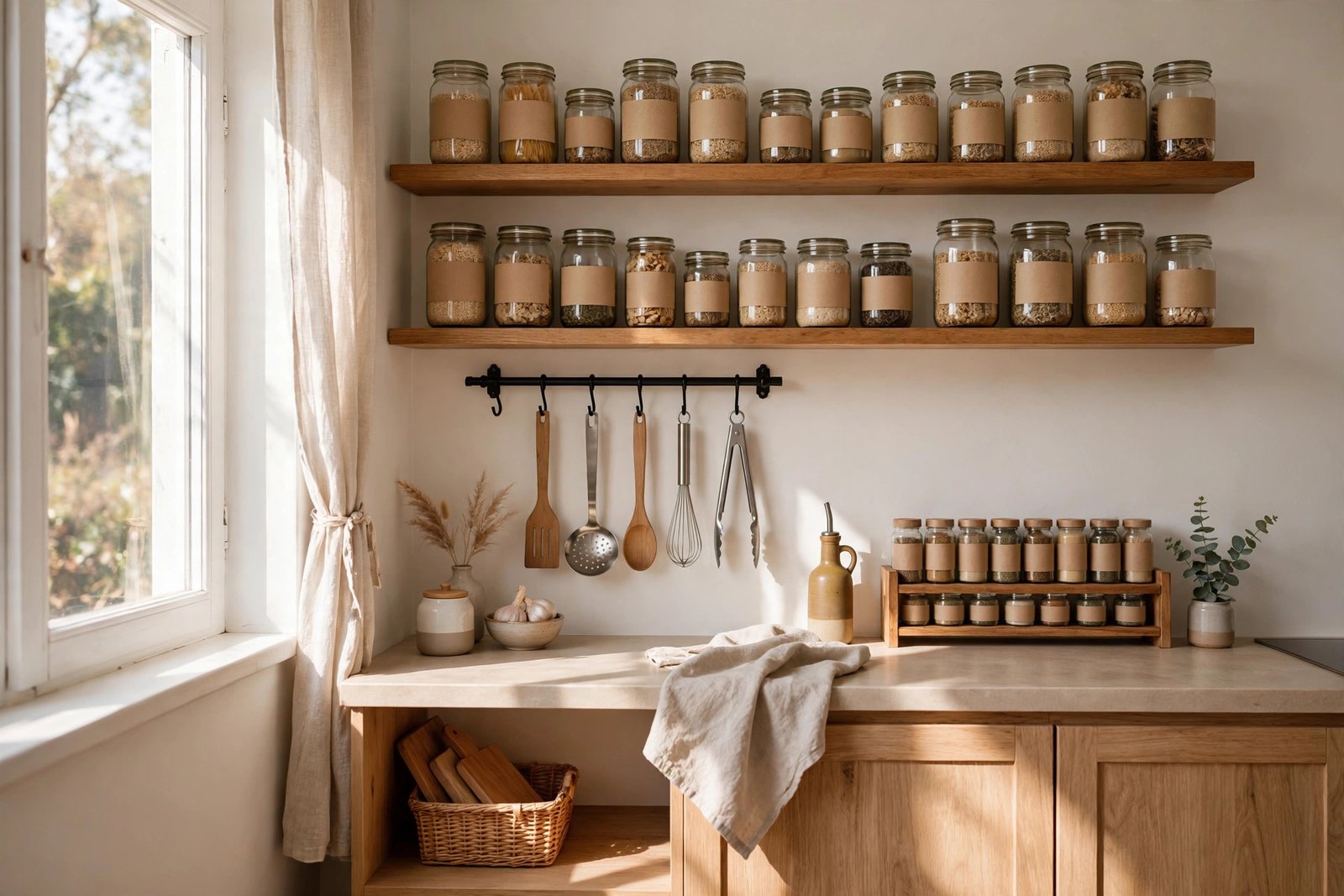
A small kitchen feels cramped for one simple reason: everything is fighting for the same flat surfaces. The fix is not a remodel — it is using the vertical space, the dead corners and the insides of doors that most kitchens ignore. These 11 ideas work in rentals and owned homes alike.
1. Go vertical with wall shelves
Two floating shelves above the counter hold everyday dishes and glasses, freeing whole cabinets for food. Keep the prettiest items up there; it looks designed, not desperate.
2. Magnetic spice storage
Spices eat cabinet space and expire in the dark. Magnetic tins on the fridge side or a wall strip keep them visible, fresh and out of the cupboards entirely.
3. Over-the-sink dish rack
In a small kitchen the sink surround is prime real estate doing nothing. A roll-up or over-sink rack turns it into a draining and prep zone.
4. Inside-of-door organizers
The inside of cabinet and pantry doors fits slim racks for wraps, lids, cleaning sprays and spices. It is found space — usually 10–15 cm deep and completely wasted.
5. Tiered shelf risers
A simple riser doubles a cabinet shelf: cans and jars stack in two visible rows instead of hiding behind each other.
6. A lazy Susan in the corner cabinet
Corner cabinets swallow things forever. A turntable brings everything to the front with one spin.
7. Under-shelf baskets
These clip onto existing shelves and create a half-level for mugs, bowls and packets — no drilling, no tools.
8. A rail with hooks
One wall rail holds utensils, pans and even a small herb pot. It clears the utensil drawer for things that truly need a drawer.
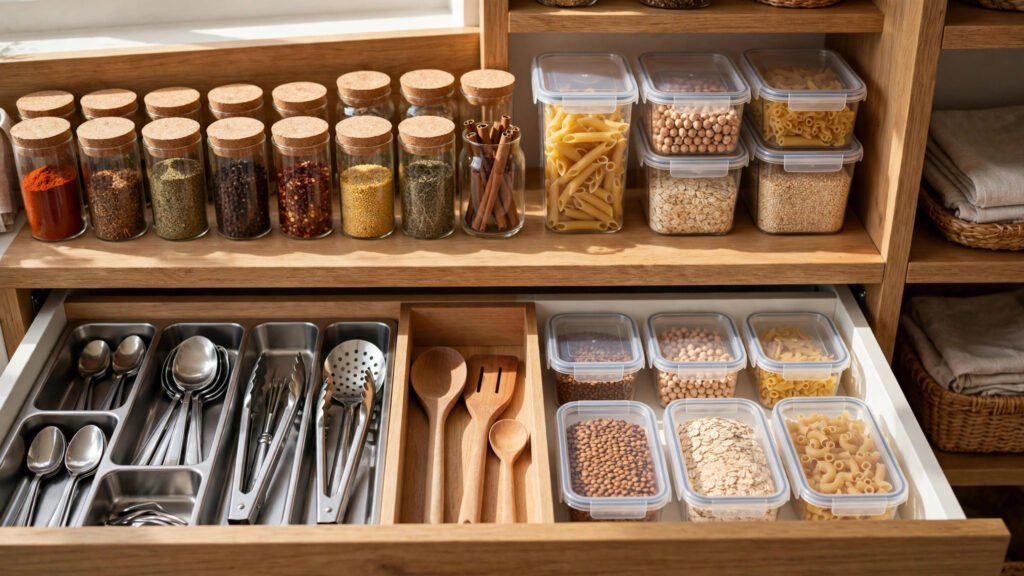
9. Stackable, square containers
Round containers waste corners. Square, stackable, same-size containers for flour, pasta and rice can increase usable pantry space by a third.
10. The slim rolling cart
That 15 cm gap beside the fridge? A slim rolling cart fits there and holds bottles, oils and cans — a whole pantry shelf that appears from nowhere.
11. Drawer dividers, finally
One Sunday, one set of dividers. A divided drawer holds more and you will stop buying duplicates of things you already own but could not find.
The rule that makes it all work
Organize by how often you use things, not by what they are. Daily items at arm’s height, weekly items higher, once-a-year items in the hardest corner. Do that, and even a tiny kitchen starts to feel calm — and much bigger.