
Tag: smart thermostat 2026

  • Smart Thermostats Are Surging Again in Fall 2026: What the New Energy Data Means for Your Heating Bill

    Smart Thermostats Are Surging Again in Fall 2026: What the New Energy Data Means for Your Heating Bill

    The heating season is here, and the thermostat is back in the spotlight

    Every fall the same question comes back: is a smart thermostat actually worth it, or is it just a gadget with a nice screen? This October, fresh research gives a clearer answer than the marketing ever has — and it is more nuanced than either the fans or the skeptics admit.

    Parks Associates’ 2026 State of Home Energy Management report, released in October 2026, finds that 17% of US internet households now own a smart thermostat, and the same share — 17% — report having a heat pump. Those are low adoption numbers for technology that has been sold for over a decade, which is exactly why the report frames them as a growth opportunity for utilities and manufacturers rather than a saturated market.

    What owners actually say about savings

    Here is the striking number: 87% of smart thermostat owners report energy savings that met or exceeded their expectations. That is a strong satisfaction signal, and it lines up with ENERGY STAR’s estimate that certified smart thermostats save households an average of about 8% on heating and cooling bills. Note the scope of that figure: it applies to heating and cooling costs, not your entire energy bill.

    But the honest version of this story includes a caveat. Consumer reporting in October 2026 points to field research — two randomized experiments tracked over 18 months — that found little evidence of a statistically significant average reduction in energy use, because residents’ behavior often undermined the savings. People overrode schedules, heated empty rooms, or simply did not use the energy-saving features intensively.

    Both findings can be true at once. A smart thermostat saves money mainly by cutting heating and cooling you do not need. If you already keep a strict manual schedule, there is less waste to remove. If you routinely leave the heat high while you are out, the device has far more to work with.

    Why heat pumps keep appearing in the same conversation

    Search data from October 2026 shows heat pumps as the electrification anchor of home climate, with searches up 22% year over year. The connection is practical: a smart thermostat is often the control layer for a heat pump system, and both purchases tend to happen when a homeowner is rethinking heating costs.
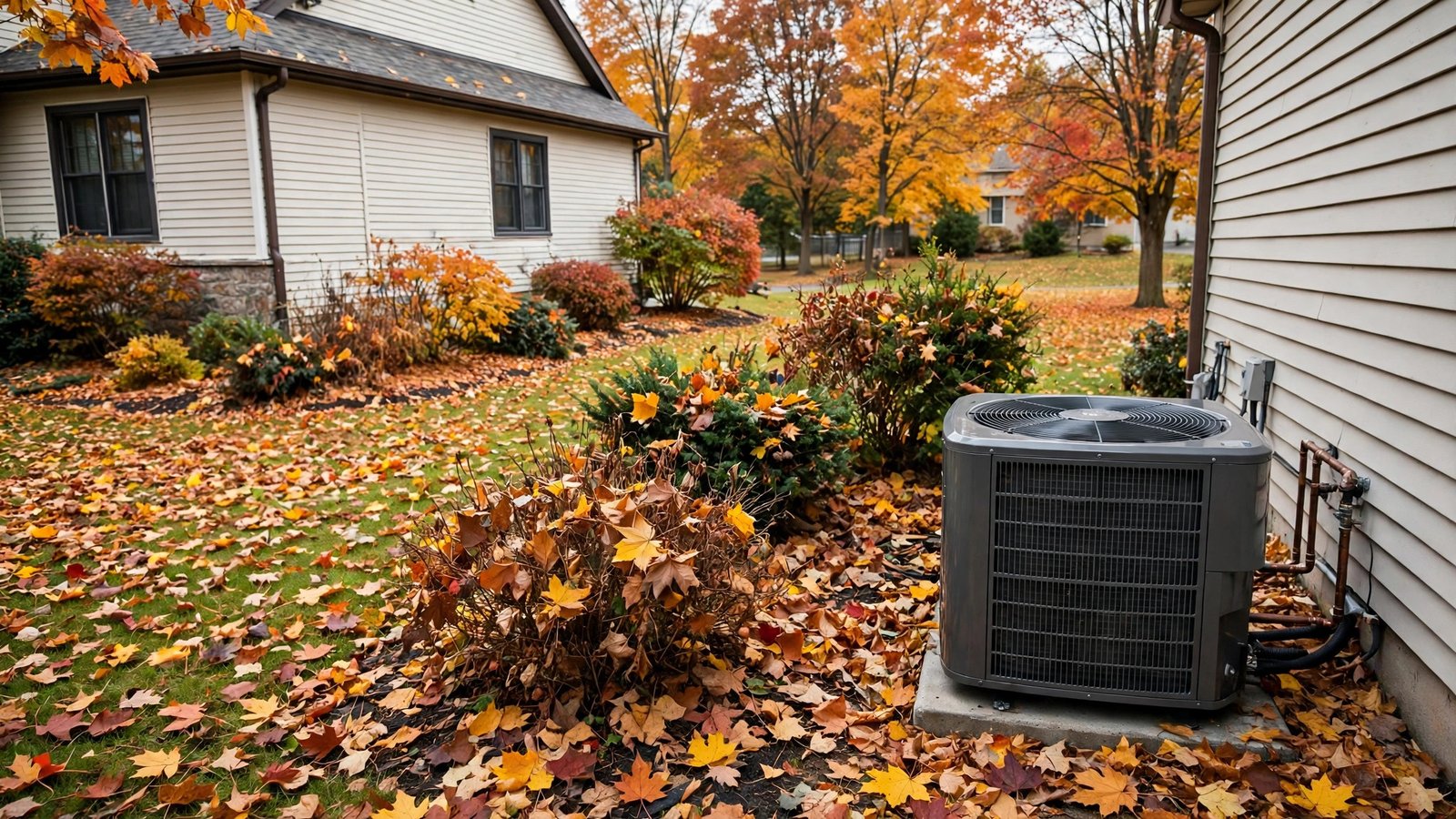
    Outdoor heat pump unit beside a house in autumn

    That does not mean a heat pump is right for every home. They work best in well-insulated houses, and installation costs and local climate matter enormously. What the data does suggest is that the two upgrades are increasingly bought as a pair — efficient equipment plus smarter control — rather than as isolated gadgets.

    The missed opportunity: utility programs

    Perhaps the most surprising finding in the Parks Associates report is that only 17% of smart thermostat owners participate in demand response programs — utility schemes that adjust your thermostat slightly during peak demand, usually in exchange for bill credits or rebates. That is a large untapped saving sitting in homes that already own the hardware.

    If you already have a smart thermostat, checking your utility’s demand response or rebate program is the cheapest upgrade available: it costs nothing and uses equipment you already paid for. If you are shopping for one, a rebate-friendly certification can shorten the payback period considerably.

    Checklist: should you buy one before winter?

    • You leave the heat on in an empty house. This is the biggest savings signal. Scheduling and geofencing directly attack this waste.
    • Your heating is uneven. Room sensors help when one room is always cold and another always hot — the thermostat stops reading only the hallway wall.
    • Your utility offers rebates or a demand response program. Check before you buy; the rebate may decide which model makes sense.
    • Your home is already well sealed and insulated. A smart thermostat cannot fix drafts or missing insulation — fix those first and the thermostat’s job gets easier.
    • You will actually use the schedule. Be honest: if you will override it daily, the savings shrink. The device rewards a set-and-forget mindset.
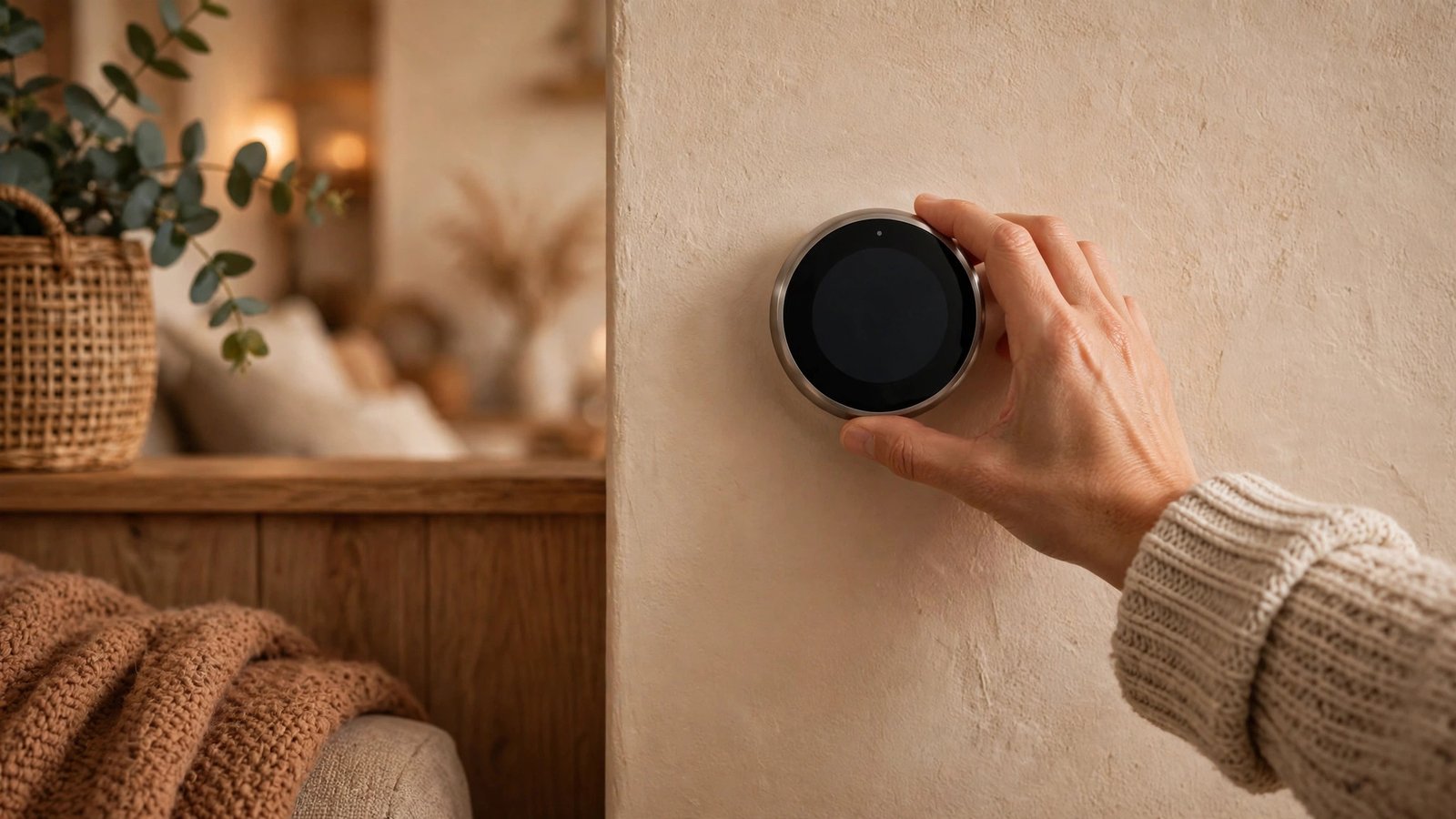
    Hand adjusting a smart thermostat

    The bottom line

    Smart thermostats are not magic, and they are not a scam either. The 2026 data paints a middle picture: owners are largely happy, average certified savings run around 8% of heating and cooling costs, and the biggest gains go to households with wasteful habits or uneven heating. Pair that with a utility rebate check and a look at your insulation, and you have a heating-season upgrade grounded in evidence rather than hype.

    Sources: Parks Associates 2026 State of Home Energy Management report (October 2026); ENERGY STAR certified smart thermostat savings estimates; Consumer Affairs reporting, October 20, 2026; RisingTrends home appliance trends, October 2026.
  • Apple Home Collection 2026: Every Accessory, Price and Release Date From the October 13 Launch

    Apple Home Collection 2026: Every Accessory, Price and Release Date From the October 13 Launch

    Apple’s smart home strategy just changed overnight. On October 13, 2026, at its “Welcome Home” event in New York, the company did something it has avoided for years: it put its name on a full lineup of smart home accessories — cameras, a video doorbell, a smart deadbolt, thermostats and sensors — designed in collaboration with LG Electronics and Schneider Electric.

    This isn’t another third-party “Works with Apple Home” badge. Apple says it co-designed every product for one-tap iPhone setup, management entirely in the Home app, and end-to-end encrypted data that even Apple can’t read. Here’s what’s coming, what it costs, and when you can actually buy it.

    The cameras: four LG options, up to 2.5K video

    The lineup starts with LG’s four-camera monitoring set. Every camera records up to 2.5K resolution and can recognize people, familiar faces, pets, vehicles and packages. Video history lives in your iCloud+ plan (up to 10 days of event history) — there’s no separate camera subscription. On eligible iCloud+ plans, Apple Intelligence adds automatic video descriptions and natural-language footage search.

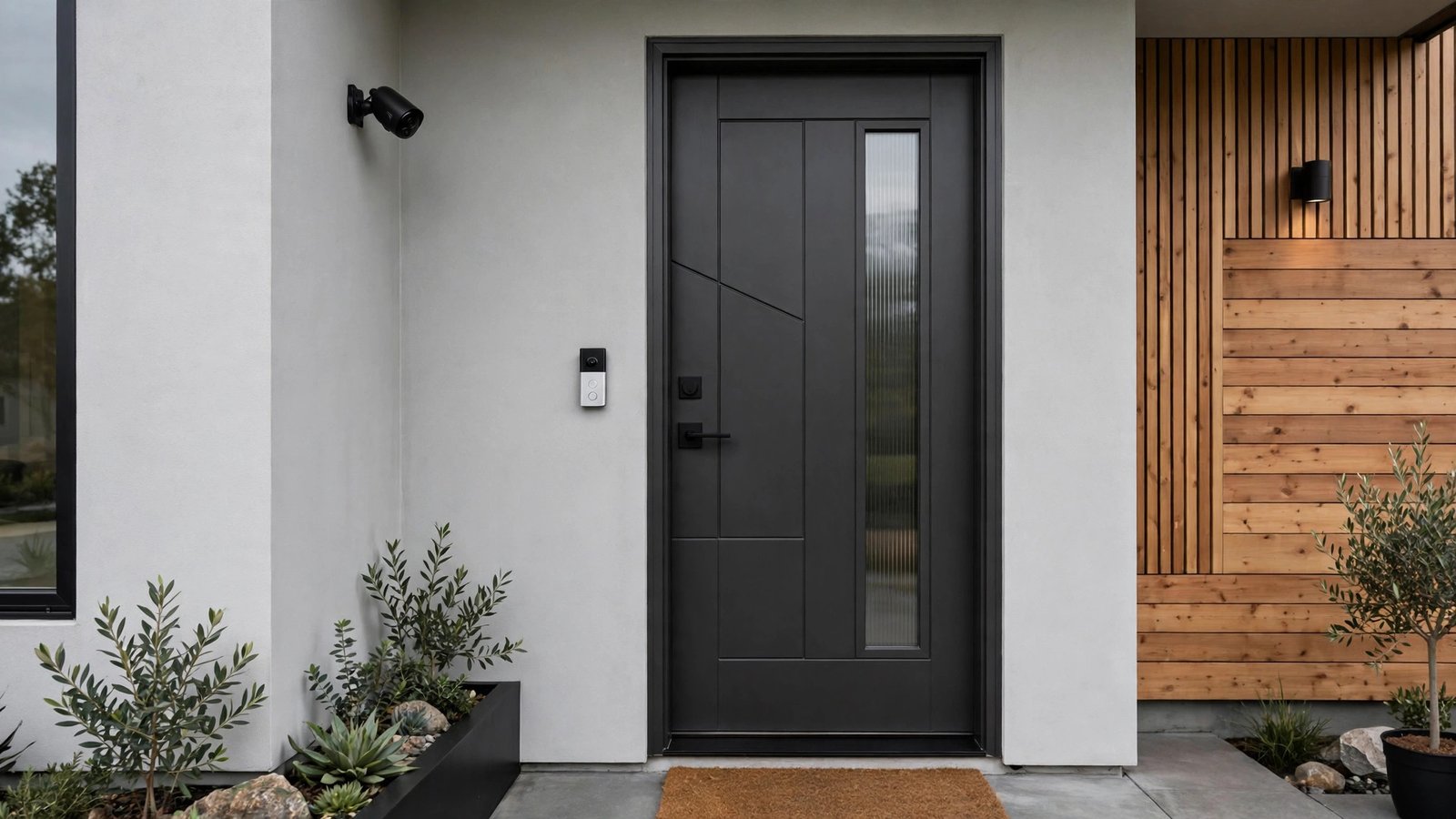
    • LG Video Doorbell Wired — from $249.95. Dual cameras: a 2.5K front camera for visitors and a full-HD bottom camera aimed at packages. Built-in spotlight, plus a chime that plays through HomeView, HomePod and HomePod mini.
    • LG Floodlight Cam — from $399.95. Adaptive dual floodlights that trigger on motion, with low-light color night vision for perimeter coverage.
    • LG Outdoor Cam Plug-In — from $299.95. Angleable, self-installable outdoor coverage, also with color night vision.
    • LG Indoor Cam Plug-In — from $199.95. The privacy-conscious one: it automatically tilts away when a household member returns home and back up when everyone leaves.
    Close-up of a sleek smart thermostat mounted on a light living room wall

    The lock: keyless entry without the app juggling

    LG’s Smart Deadbolt Lock — from $349.95 — uses Ultra Wideband to detect your approach and unlock automatically as you walk up with a home key on a compatible iPhone or Apple Watch. There’s also an integrated PIN pad and a hidden backup key slot. Guest access is shared directly from the Home app. Like the rest of the line, it’s Matter-compatible and works locally, so core access functions continue without internet.

    Two thermostats, room sensors from $39.95

    Home climate gets two smart thermostats — one from LG and one from Schneider Electric, both from $199.95 — so you can match your pick to your HVAC ecosystem. Room-level control comes from the LG Temperature Sensor and Schneider Home Room Sensor, each from $39.95. In the contiguous US, Apple’s Clean Energy Guidance feature can shift heating and cooling to cleaner, lower-cost periods on compatible utility plans.

    Smartphone displaying a home automation app controlling lights, thermostat and cameras in a bright living room

    Setup, privacy and installation

    The whole line promises the Apple setup experience: one tap with an iPhone adds an accessory to Apple Home — no extra app, no separate account. Everything supports Thread and updates its own network credentials if you change your Wi-Fi. On privacy, Apple says camera footage and Home app data are end-to-end encrypted and never accessible to LG, Schneider Electric or Apple itself.

    Prices and when you can buy

    Availability begins in December 2026 at apple.com, the Apple Store app and Apple Store locations, with select accessories arriving early 2027. Cameras come in Essence Graphite and Silver (Indoor Cam in Essence White) across the US, Canada and the UK; the lock, thermostats and sensors are US and Canada. One notable gap for European readers: Apple says HomeView won’t be sold in the EU for now, while Apple works through Siri AI compliance.

    The bottom line

    Apple has trailed Amazon and Google in branded smart home hardware for years. The Home Collection is its first serious answer: a coherent, privacy-first lineup where one app really does run everything. The December launch window means these land just in time for holiday gifting season.

    Source: Apple Newsroom press release, October 13, 2026.