
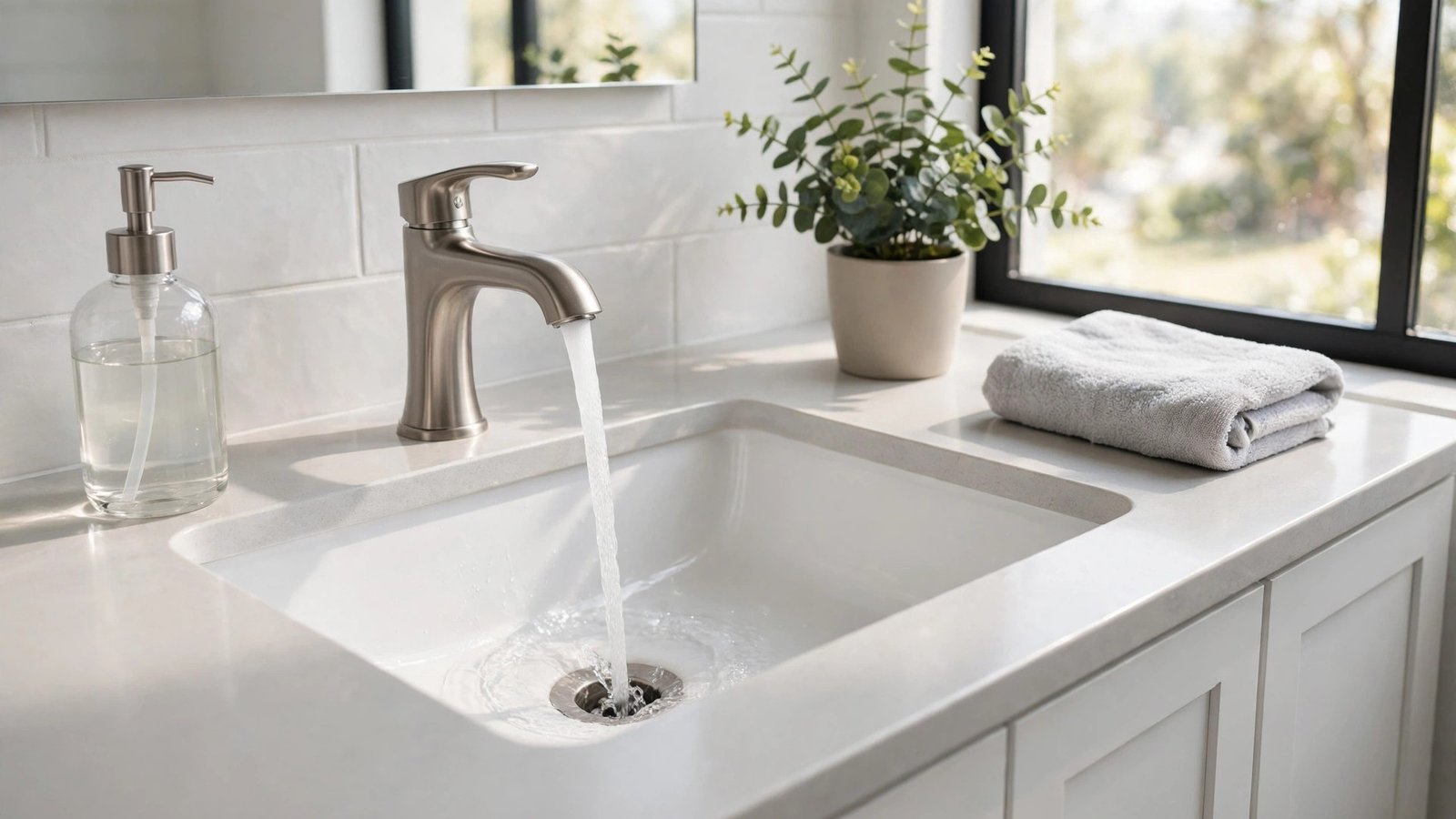
The slow drain is telling you something
A bathroom drain rarely goes from fine to fully blocked overnight. It slows down a little each week as hair, soap scum, toothpaste, and skin oils build up in the trap and the first few feet of pipe. That slow-down is useful information: it means the clog is almost certainly close to the drain, where you can reach it, rather than deep in your main line.
Harsh chemical drain cleaners promise a quick fix, but they are a poor first move in a bathroom. They can splash back, damage older pipes and finishes, and they do nothing about the real culprit — a mat of hair that chemicals only partly dissolve. Worse, if you later need a plumber, a drain full of caustic cleaner becomes a hazard for whoever opens it. Try the mechanical route first. It is cheaper, safer, and it usually works.
Step 1: Start with the plunger (the right one)
Most bathroom clogs give in to a simple cup plunger — the classic dome-shaped one, not the flange plunger made for toilets. Remove the drain stopper if you can, and block the overflow hole with a wet rag so pressure goes down the drain instead of out the overflow.
Add enough water to cover the plunger cup, then plunge firmly for 15 to 20 seconds: push down, pull up, keep the seal. Lift and check. If the water drops faster, run hot tap water for a minute to flush loose debris. If nothing changes, do not keep plunging for half an hour — move on to the stopper.
Step 2: Clean the stopper and the first inches of pipe
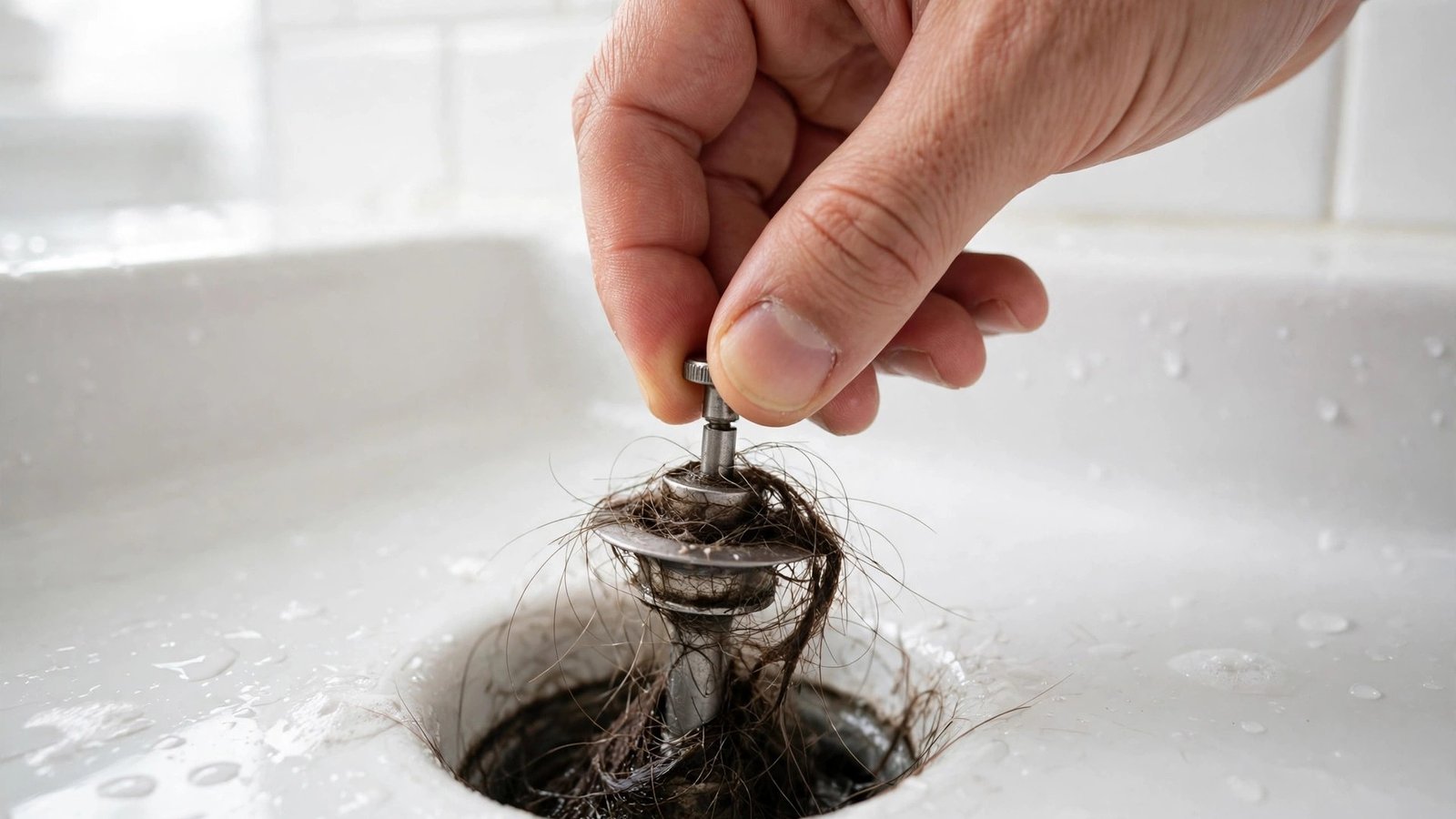
In bathroom sinks, the pop-up stopper itself is often the clog. Hair wraps around its rod and pivot, and soap scum glues it all together. Unscrew or lift out the stopper (check your faucet maker’s instructions if it resists — forcing it can break the linkage). If the tap itself has lost pressure as well as the drain running slow, the aerator is usually the culprit — our faucet pressure guide covers the fix. Pull off the hair and gunk with paper towels, scrub the stopper, and rinse.
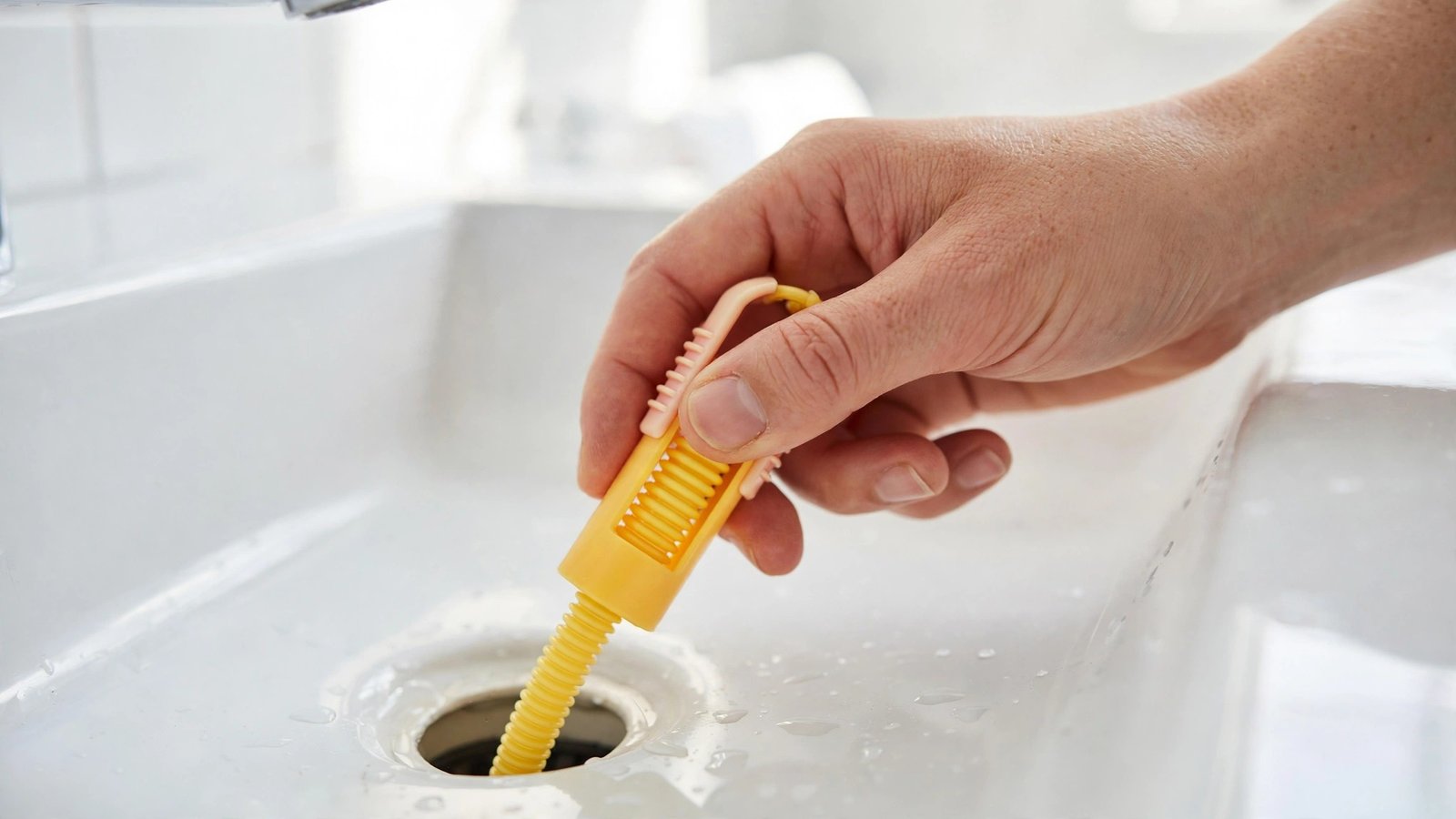
For tubs and showers, lift the drain cover and look inside with a flashlight. You will often see the clog right there. A small plastic drain stick — the barbed kind sold for a few dollars — slides in, twists, and pulls hair out. It is unpleasant and very satisfying. Do not push the clog deeper with a long tool if you can see it near the surface; pull it out instead.
Step 3: Use a small drain snake for deeper clogs
If the drain is still slow after the stopper is clean, the clog sits a little deeper. A small hand-crank drain snake (also called a drain auger) for sinks and tubs can reach it. Feed it gently, crank slowly, and pull back when you feel resistance — the goal is to hook or break up the clog, not to force the cable through a pipe joint.
Work in short passes, rinsing between attempts. Never use a powered auger on a bathroom sink drain unless you know what you are doing; too much force can crack a trap or scratch a fixture. If the snake meets solid resistance very quickly, or if several drains in the house are slow at once, stop — that points to a deeper or shared-line problem. Family Handyman’s guide to unclogging a drain shows the same snake technique with photos of each pass.
What about baking soda and vinegar?
You have probably seen the volcano trick: baking soda followed by vinegar, fizzing impressively. It is fun, but it is not a clog remover. The fizz is mostly carbon dioxide, and it does not dissolve hair. At best it loosens light soap film near the surface.
A more honest option for maintenance — not for an active clog — is an enzyme-based drain cleaner, which uses bacteria to break down organic buildup over hours. It will not clear a solid hair mat, and it will not work instantly, but it is gentler on pipes than caustic chemicals. Think of it as prevention after you have cleared the drain mechanically, not as the rescue itself. The EPA’s Safer Choice program lists enzyme-based cleaners as a gentler option for maintenance once the clog is cleared mechanically.
The one tool worth owning
A small plastic drain stick costs a few dollars and lives in the cupboard until you need it. A hand-crank snake costs $15–$25 and handles most sink and tub clogs. Skip powered augers for bathroom sinks — they are too much force for small traps and fixtures. Keep a cup plunger (not a flange plunger) in each bathroom so the right tool is always close at hand. The same hands-on approach works around the bath — resealing the tub edge keeps water out of the wall once the drain is flowing again.
Prevention checklist: keep it from coming back
- Fit a mesh drain cover or hair catcher in showers and tubs, and empty it weekly.
- Wipe hair out of the sink after shaving or brushing long hair over it.
- Once a month, remove the stopper and rinse away early buildup before it hardens.
- Run hot water for 30 seconds after heavy use (shaving cream, thick conditioner) to move residue along.
- Never pour grease, plaster, or grout rinse water down a bathroom drain.
These five habits take about two minutes a week and prevent most repeat clogs.
When to stop and call a plumber
Call a professional if: more than one drain is slow or backing up; water backs up into the tub when the toilet flushes. A toilet that keeps running on its own is a separate, simpler fix — usually the flapper or the fill valve — and it is worth sorting at the same time as the drain. You smell sewage; the drain gurgles after you have cleared the trap area; or the clog returns within days of clearing it. Those signs can mean a vent problem, a damaged pipe, or a main-line blockage — all jobs for proper tools and diagnosis, not for more plunging.
Also call a plumber rather than opening the P-trap yourself if you are unsure how it reassembles. A trap that leaks after reassembly can cause slow water damage inside a vanity that costs far more than the service call.
The order that works
For a single slow bathroom drain, work in this order: plunger, stopper, small snake. Skip the harsh chemicals, skip the volcano trick as a cure, and treat enzyme products as maintenance only. Most bathroom clogs are hair and soap scum within arm’s reach — clear them mechanically, add a hair catcher, and the drain usually stays fast for months.