

Intro
There is a specific weekend every fall when the weather turns and every homeowner thinks the same thing: I should have done this sooner. The first hard freeze does not negotiate. Water left in a hose bib cracks a pipe, clogged gutters overflow into ice dams, and a small gap in caulk becomes a winter-long draft and a spring repair bill.
The good news is that winterizing a home’s exterior is mostly a checklist, not a project. No contractor is required for most of it, and the whole job fits into one or two weekends if you work top down, water first. This guide walks through that order, flags the jobs that genuinely need a professional, and notes the mistakes that turn a simple chore into a claim.
Start at the top: roof and gutters
Work from the top down, because everything above affects everything below.
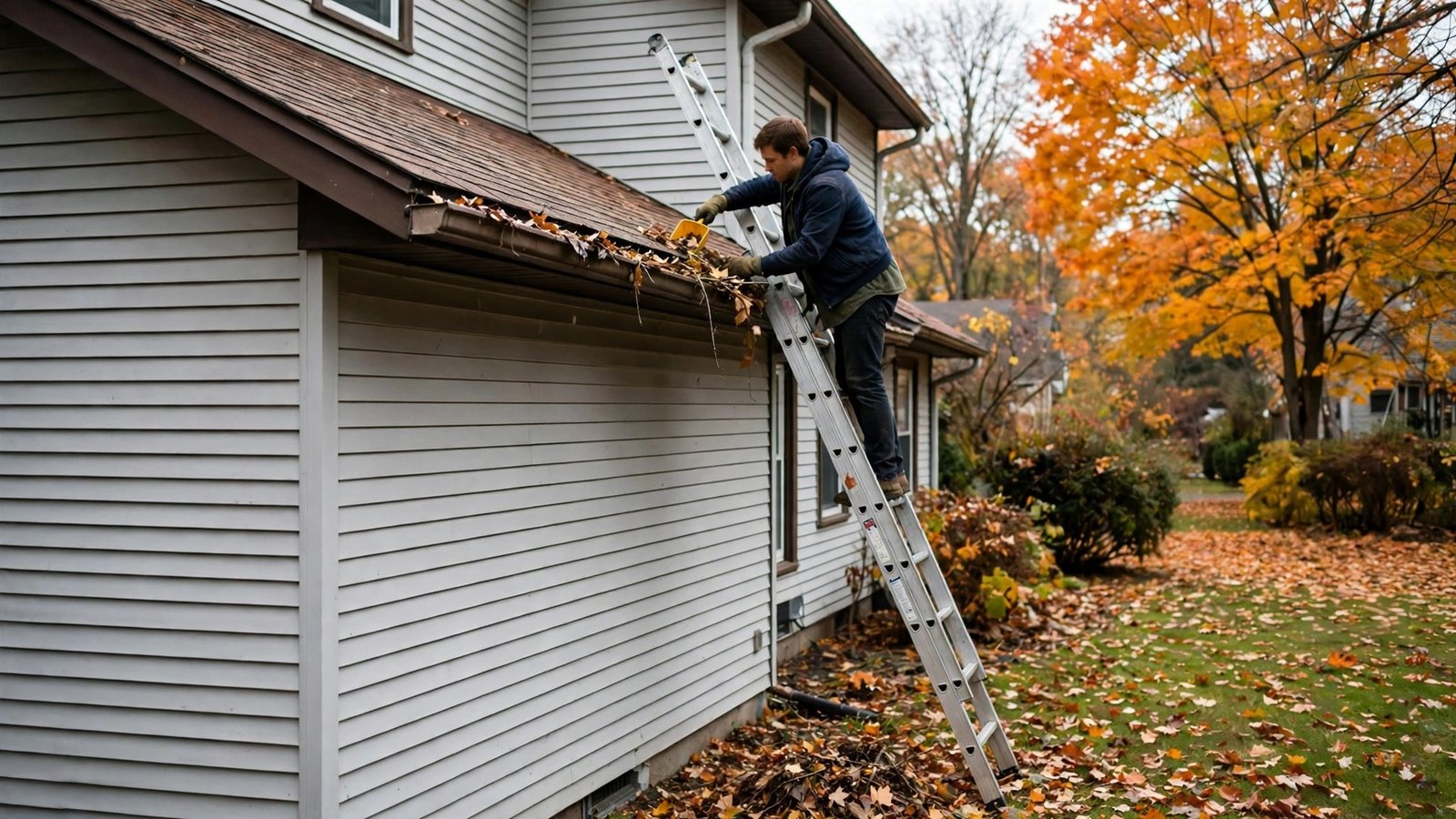
Gutters and downspouts. Clean leaves and debris out of gutters and check that downspouts carry water at least several feet away from the foundation. Clogged gutters cause overflow that soaks siding and foundations, and ice dams, where trapped water freezes at the roof edge and backs up under shingles. If heights bother you, hire this out — gutter cleaning is inexpensive.
Roof check from the ground. With binoculars, scan for missing, curled or damaged shingles, loose flashing around chimneys and vents, and any sagging sections. A missing shingle found in October is a quick repair; found in February, under snow, it is a leak.
Trees and branches. Trim branches that overhang the roof or touch the house. Winter weight — snow and ice — turns a branch that merely brushes the roof in October into one that scrapes shingles or breaks onto them in January.
Protect the pipes: water is the expensive enemy
Frozen pipes cause some of the costliest winter damage in a home, and almost all of it is preventable.
Outdoor faucets and hose bibs. Disconnect all garden hoses, drain them, and store them. Then shut off the interior valve feeding each outdoor faucet if your home has one, open the outdoor faucet to let remaining water drain, and leave it open. Add an insulated foam cover over each hose bib — they cost a few dollars and take a minute to fit. This single step prevents the most common freeze-break in the house.
Exposed pipes. Any water pipe in an unheated space — garage, crawl space, exterior wall — deserves insulation. Foam pipe sleeves are cheap, cut to length, and slide on without tools. Pay special attention to pipes near exterior walls and in drafty corners.
Know your main shutoff. Before winter, make sure everyone in the household knows where the main water shutoff is and that it actually turns. If a pipe does burst, the difference between a mop and a renovation is the minutes it takes to shut the water off.

Seal the envelope: caulk, weatherstripping and drafts
Once water is handled, turn to air. A home’s envelope does most of its winter work through small gaps, not big holes.
Exterior caulk. Walk the perimeter and look at the joints where different materials meet: window frames to siding, door frames to trim, vents and hose bibs to walls. Cracked, missing or shrunken caulk is an open invitation to drafts and moisture. Remove loose old caulk, clean the joint, and apply exterior-grade caulk on a dry day above the temperature on the tube’s label — caulk applied in cold, wet weather will not bond properly.
Weatherstripping and door sweeps. Close each exterior door on a piece of paper: if the paper slides out easily, the seal is weak. Replace worn weatherstripping and add a door sweep to any door with a visible gap at the bottom.
Vents and openings. Cover foundation vents if your climate calls for it, screen off openings where pests enter, and check that dryer and bathroom vents are clear — blocked vents are a fire risk.
Ground level: walkways, yard and outdoor gear
Walkways and steps. Check for cracks, loose pavers and uneven sections before ice makes them hazards. A small crack filled now stays small; the same crack filled with ice all winter grows. Keep de-icer and a snow shovel accessible before the first storm.
Yard and drainage. Rake leaves away from the foundation and out of window wells. Make sure soil and mulch slope away from the foundation rather than toward it; water pooling at the foundation wall in winter becomes foundation trouble in spring.
Outdoor gear and furniture. Drain and store hoses and sprinklers, bring in or cover furniture that will not survive freeze-thaw cycles, and winterize lawn equipment: run the fuel out or add stabilizer, and store it dry.
The order of work: a two-weekend plan
Weekend one — water and height: gutters, roof scan, tree branches, hose bibs, exposed pipes, main shutoff check. These are the jobs that protect against the costliest damage, and the ones weather can interrupt.
Weekend two — sealing and ground: caulk, weatherstripping, door sweeps, walkways, yard drainage, gear storage. These are comfort and longevity jobs, and they are easier once the urgent water work is done.
When to call a professional
Most of this checklist is homeowner work, but three jobs deserve a pro: anything that puts you on a steep roof or a high ladder, any suspected roof damage beyond a single missing shingle, and any plumbing work beyond shutting off and draining an outdoor faucet. Gas lines, electrical service entries and chimney repairs are never do-it-yourself jobs. And if your home has a history of ice dams, ask a roofer or insulation contractor about the underlying cause — usually inadequate attic insulation or ventilation — because cleaning gutters treats the symptom, not the cause.
Common mistakes to avoid
- Leaving hoses connected. A connected hose traps water in the faucet and the pipe behind it — the single most common cause of a burst hose bib.
- Caulking in cold or wet weather. Caulk needs a dry surface and a minimum temperature to bond. A rushed job in November rain will fail by January.
- Ignoring the downspout exit. Clean gutters mean nothing if the downspout dumps water right at the foundation. Extend it away from the house.
- Sealing a house too tightly without ventilation. Sealing drafts is good; blocking vents that a furnace or water heater needs for combustion air is dangerous. Never seal combustion-air openings.
- Forgetting the shutoff. The most expensive winter mistake is not a missed chore — it is not knowing where the water shutoff is when a pipe bursts at 2 a.m.
FAQ
When should I winterize — is late October too late?
Late October is ideal in most of the U.S.: leaves are mostly down, so gutters stay clean after you clear them, and the first hard freeze usually has not arrived yet. If a freeze is forecast this week, do the hose bibs and exposed pipes today — that job takes under an hour.
Do I need to winterize if winters are mild where I live?
Mild-winter homes still get occasional freezes, and one hard night is all a burst pipe needs. Hose bibs, exposed pipes and drainage matter wherever temperatures can dip below freezing, even briefly.
Are gutter guards a substitute for cleaning?
Guards reduce debris but do not eliminate maintenance — small debris and granules still accumulate, and guards themselves need checking. Clean and inspect regardless, at least once a fall.
Should I cover my air conditioning unit for winter?
Most manufacturers do not require a full cover, and a tight cover can trap moisture. A simple top cover to keep leaves and ice out of the fan is usually enough; check your unit’s manual before wrapping it completely.
Bottom line
Winterizing is not glamorous, and that is exactly why it gets skipped — until the spring repair bill arrives. Work top down, water first: gutters and roof, hose bibs and pipes, then caulk, drafts and ground-level fixes. Two weekends now buys a winter without burst pipes, ice dams and drafts, and a spring without the repair list that follows them. Start with the hose bibs today if a freeze is coming — the rest can follow in order, but water will not wait.
Leave a Reply