
Every winter the same complaints return: stuffy air, allergy flare-ups, dry skin, static shocks, and filters that come out grey after a few weeks. The house has not changed. The season has.
Between November and March, homes seal up. Windows close, heating runs for months, and the free ventilation summer provided disappears. Filter suppliers report that customer calls about stuffy air and heavily discolored filters spike in exactly those months. Most winter air problems come down to three manageable things: humidity, filtration and moisture control. Get those right and the air genuinely feels better — without buying a shelf of gadgets.
The 30–50% rule
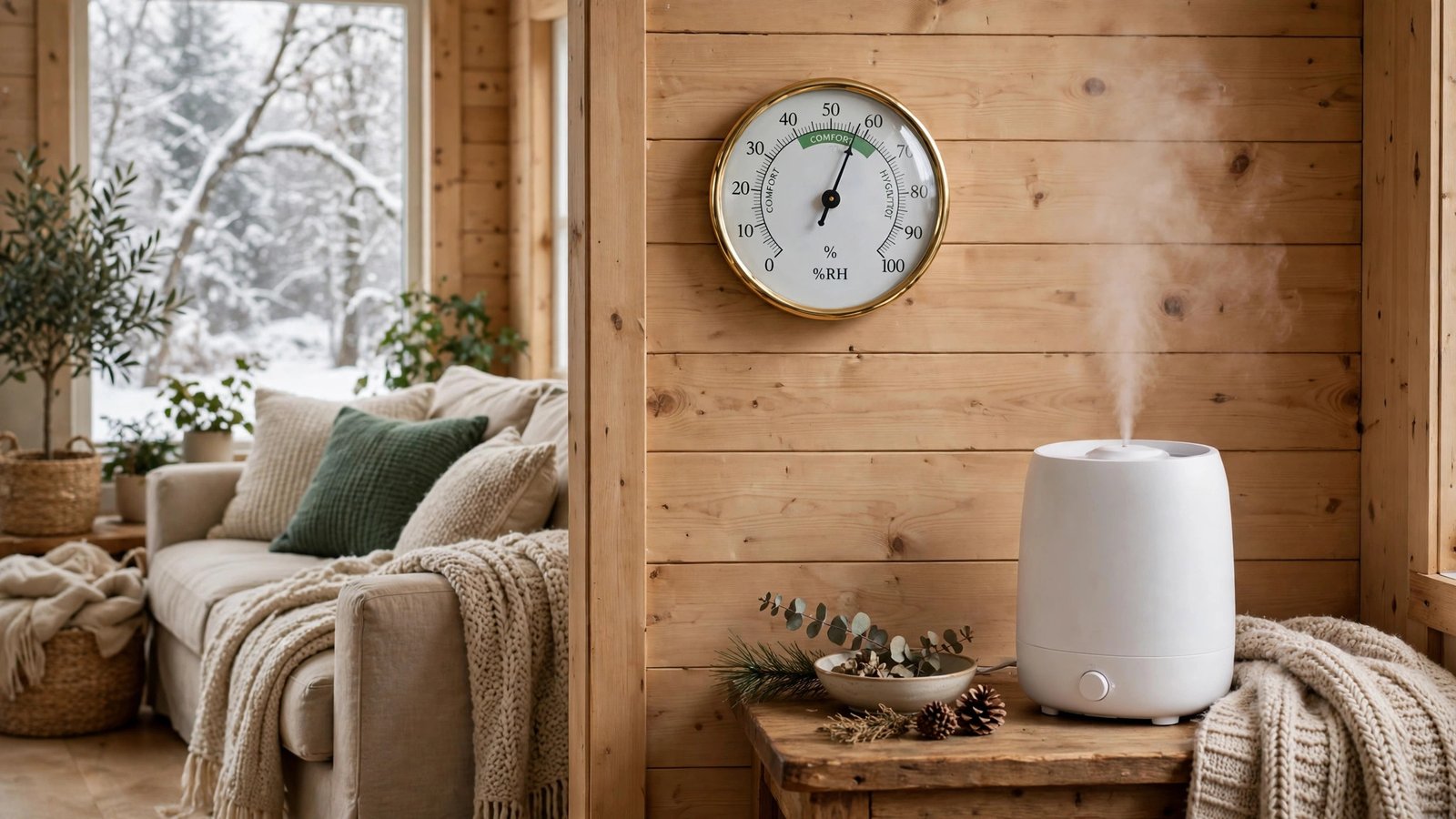
The US Environmental Protection Agency’s guidance is simple: keep indoor relative humidity below 60 percent, and ideally between 30 and 50 percent during heating season. That band is a compromise between two problems. Below 30 percent, heated air dries out skin, airways and wooden floors and trim. Dry air also feels colder, so people push the thermostat up — wasting energy to chase comfort that humidity would have provided. Above 50 to 55 percent in winter, moisture condenses on cold surfaces: windows stream, and mold can grow behind furniture and around window frames. Over years, persistent damp can rot wall sheathing. Aim for 30 to 40 percent in main living areas once heating runs consistently, and up to 50 percent if your home holds it without window condensation. A small, inexpensive hygrometer removes all guesswork — check living areas and the basement separately, because they often tell different stories. Basements follow different rules: 50 to 55 percent in early fall is not unusual, but a consistent reading above 55 percent warrants a dehumidifier regardless of season. The EPA’s guide to indoor air quality states the same 30 to 50 percent target and explains why both edges of the range matter.
Start with the filter, not the purifier
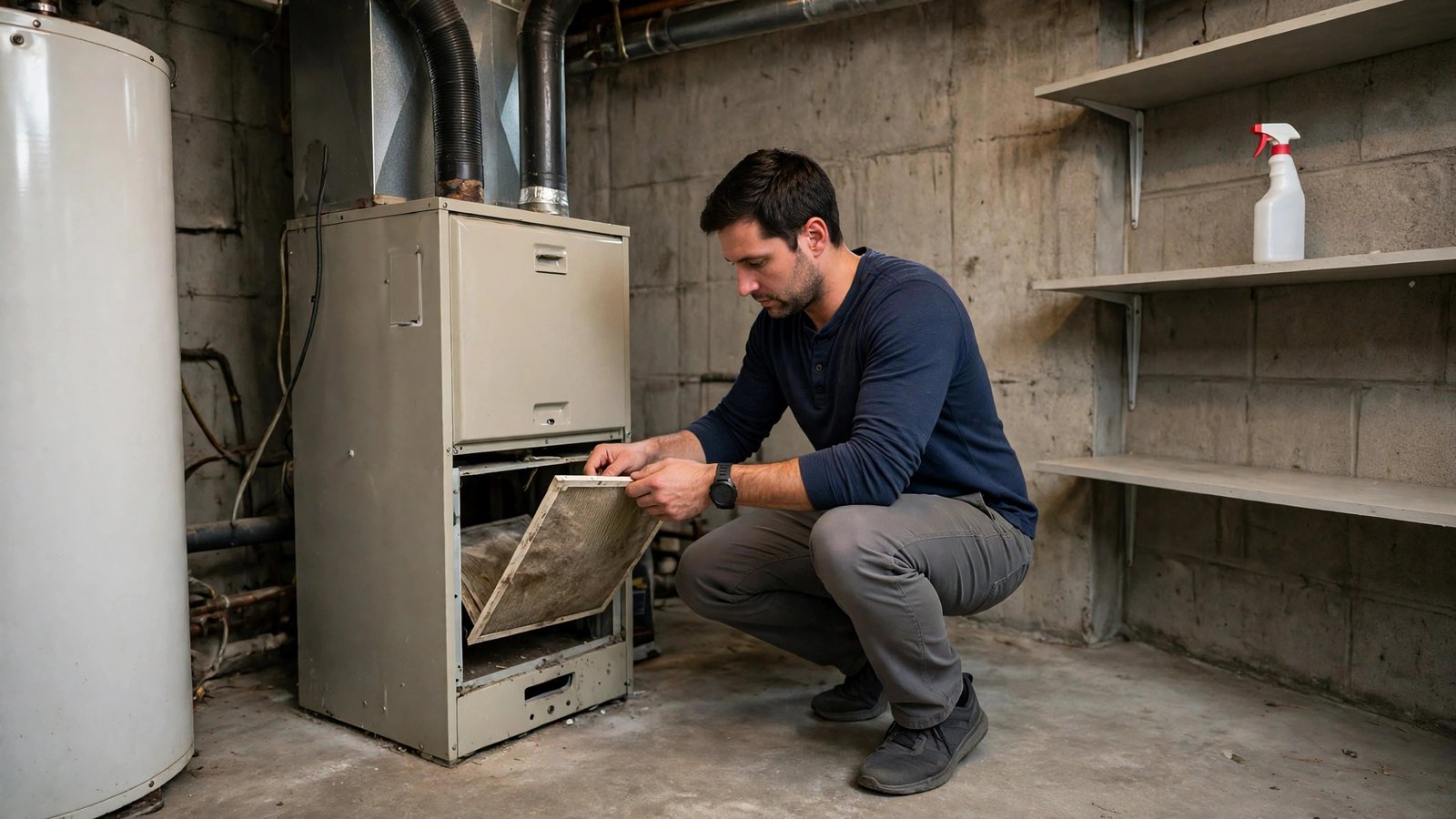
For winter air quality, the most effective first step is unglamorous: change the furnace filter, and use the right rating. Filter guidance commonly cited for homes is: MERV 8 — general protection, no pets or allergies. MERV 11 — pet owners and mild allergies. MERV 13 — asthma, severe allergies, or immune-compromised household members. Replace a flat fiberglass panel with a pleated option rated for your household, and check it monthly in heating season — a clogged filter restricts airflow, strains the system and stops capturing particles. Note that a higher MERV rating is not automatically better for every system: very dense filters can restrict airflow in older furnaces, so check your system’s manual or ask an HVAC technician if you are jumping ratings. Duct cleaning is rarely the first answer. Filters, humidity control and source control — venting moisture, vacuuming with a HEPA-equipped vacuum weekly, and keeping the system tuned — deliver more for most homes. If the house still feels cold even with the heat running, the problem may be air leaking in rather than air quality at all — see why your home feels cold even with the heat on for the nine hidden heat leaks worth checking first.
Moisture — the hidden winter problem
Winter does not stop mold; it hides it. Mold growth depends on moisture, not the calendar, and the EPA notes that materials still wet 24 to 48 hours after a leak or spill are likely to grow mold. Once windows close, small moisture problems stop correcting themselves and start compounding. Run this short fall check, drawn from EPA guidance: Bathroom and kitchen fans — run them during and after showers and cooking, and confirm they vent outside, not into an attic or crawlspace. Dryer vent — confirm it vents outside, not into the house or attic. Drip pans and drain lines — keep air-conditioning drip pans and condensate lines clean and unobstructed. Cold-water pipes — insulate pipes that sweat, since condensation on a pipe is the same physics as condensation on a cold glass. Gutters and grading — keep water moving away from the foundation so it cannot seep into basements and crawlspaces. If you find damp, fix the water source first. Cleaning mold without stopping moisture guarantees it returns. The EPA’s mold guidance covers the same 24-to-48-hour drying window and the cleanup steps that follow it.

What your windows are telling you
Window condensation is the most visible humidity gauge in the house, and it is free. A little moisture at the bottom corners on the coldest mornings is normal — the glass is the coldest surface in the room, and some condensation is expected when it is well below freezing outside. Streaming water, puddles on the sill, or condensation that lasts all day is not normal: it means the indoor humidity is too high for the outdoor temperature, and the excess moisture is looking for somewhere to land.
The fix is not to wipe the windows harder; it is to lower the humidity. Run bathroom and kitchen fans longer, turn the humidifier down or off, and check the basement reading — a damp basement feeds moisture into the whole house. As outdoor temperatures fall, the safe indoor humidity level falls with them: a house that holds 45 percent comfortably at 30°F outside may need 35 percent at 0°F to keep the glass dry. If the condensation is between the panes of a double-glazed window rather than on the surface, that is a different problem — a failed seal letting moist air into the gap — and it needs a glazier, not a dehumidifier. Our guide to why windows sweat in winter walks through the difference between surface condensation and seal failure in detail.
Humidifier or dehumidifier?
Fall confuses this choice because different rooms need different answers. If the main living areas feel dry, with static and dry skin, a humidifier helps — but only with a hygrometer guiding it, and only if you clean it as the manufacturer directs. An uncleaned humidifier can spread mineral dust and microbes, trading one air problem for another. If the basement feels clammy while upstairs feels fine, the basement has not followed the rest of the house down yet. A dehumidifier there, set to hold around 50 percent, is the right tool. Whole-home humidifiers attached to furnaces can work well but need annual servicing — a neglected unit can leak or over-humidify. The rule is simple: measure first, then choose the device that moves your actual reading toward 30 to 50 percent. Guessing with a humidifier in a home that is already damp is how windows start streaming. The EPA’s mold course explains the same principle in its chapter on why and where mold grows, including why low humidity also discourages dust mites.
Habits that actually help
- Vacuum weekly with a HEPA-equipped vacuum to capture settled particles before they recirculate.
- Vent moisture at the source — fans on, doors open for airflow between rooms, ceiling fans on low to break up stagnant corners.
- Service the heating system annually to catch airflow issues and duct leaks early. If the furnace smells strange when it first fires up for the season, that is a separate check worth doing — see why a furnace smells when you first turn on the heat for which smells are normal and which mean calling a technician.
- Test smoke and carbon monoxide alarms when you change filters — winter is peak season for both risks.
- Let fresh air in on milder days — even a brief cross-breeze resets stale indoor air without losing much heat. Air purifiers have a place, especially in a bedroom for allergy sufferers, but they treat symptoms in one room. Humidity, filtration and moisture control treat the whole house.
Three steps before December
Winter air feels worse because the house is sealed, heated and dry — or, in damp corners, too wet. Keep humidity between 30 and 50 percent, change to a properly rated pleated filter and check it monthly, and run the EPA moisture checklist once as the season turns. Those three steps cost little, and they are the reason the same house can feel stuffy in November and comfortable by December.