
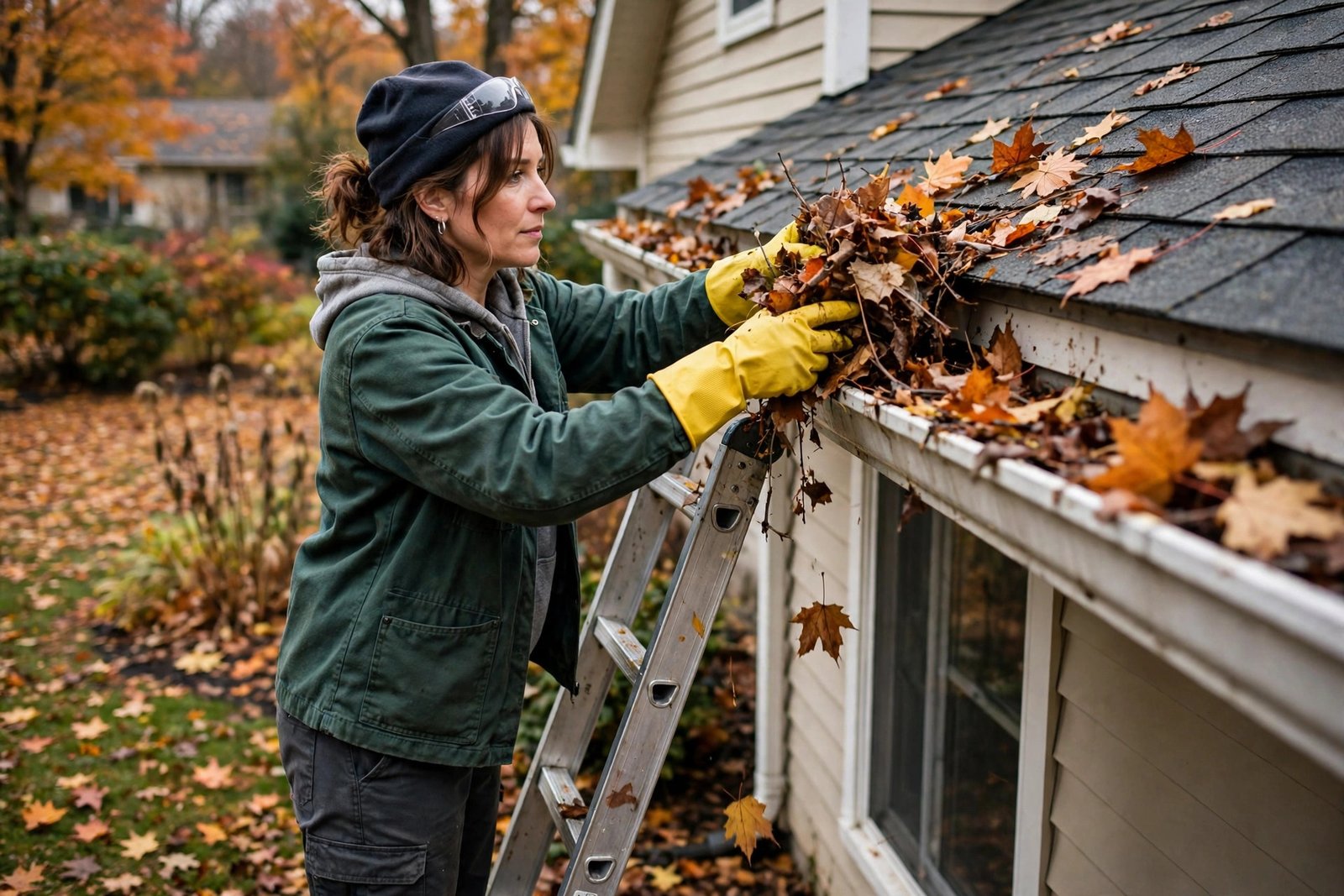
Autumn leaves look beautiful on the trees. In your gutters, they are trouble waiting for the first freeze.
Gutters have one job: carry rainwater and melting snow away from your roof and foundation. When leaves, twigs and grit clog them, water overflows — down walls, into window frames, and straight toward the foundation. In cold weather the trapped water freezes, and the result can be an ice dam: a ridge of ice at the roof edge that forces meltwater back under the shingles and into the attic. A single afternoon of cleaning in fall can prevent a spring repair bill many times larger.

Fall cleaning is especially important because it clears the season’s leaves before winter weather arrives. The Spruce recommends gutter cleaning twice a year, in spring and fall, and the fall clean is the one that protects you through winter.
When to clean: Timing matters. Clean too early and fresh leaves refill the gutters within weeks; clean too late and you are working in ice. The practical rule used by most fall checklists is: Main clean — after most leaves have fallen in your area, usually late October into November in colder climates. Second check — in November, once the trees are bare, confirm the gutters are still clear before the first hard freeze. After storms — a heavy windstorm can dump a season’s worth of debris in a night, so check again after severe weather. Homes surrounded by large trees may need more frequent cleaning. If your gutters overflow in ordinary rain, that is your signal regardless of the calendar.
How to clean gutters safely: Safety comes before speed. Falls from ladders are one of the most common DIY injuries, so do not rush this job. What you need: sturdy extension ladder, work gloves, a bucket or bag for debris, a gutter scoop or small trowel, a garden hose, and eye protection. A ladder stabilizer that rests against the roof rather than the gutter helps avoid denting or crushing the gutter. Steps: 1. Set the ladder on firm, level ground, at a safe angle — roughly one foot out from the wall for every four feet up — and never lean beyond the ladder’s side rails. 2. Work in short sections. Scoop out leaves and debris by hand or with the scoop, dropping it into the bucket rather than onto the ground below. 3. Check the downspout opening. If water will not drain, the downspout may be blocked; try flushing from the top with a hose, and clear the bottom outlet. 4. Flush the whole run with a hose. Watch for leaks at seams and joints, sagging sections and loose brackets while the water runs. 5. Confirm downspouts discharge well away from the foundation — at least several feet — and not across walkways where the water can freeze into ice. 6. Look at the fascia boards behind the gutter for rot or peeling paint, which can signal long-running overflow. Never climb onto a wet or icy roof to reach gutters, and never work from a ladder in high wind. If you feel unsteady at height, stop. That is exactly what professionals are for.
What to check while you are up there: Sagging sections — gutters should slope gently toward downspouts. Standing water means the slope is wrong or brackets have failed. Loose or missing brackets — a gutter pulling away from the fascia will only get worse under snow load. Leaky seams — small drips can be resealed with gutter sealant on a dry day; rusted-through sections need replacement. Downspout damage — dented or disconnected downspouts dump water at the foundation. Roof edge signs — missing shingles or damaged flashing near the gutter line deserve a roofer’s look before winter.
When to hire a professional: Hiring a pro is the right call if your home is two stories or higher, the ground is sloped or uneven, the gutters are hard to reach, or you are uncomfortable on a ladder. According to Angi’s 2026 cost data, professional gutter cleaning costs an average of $168, with most homeowners paying about $119 to $234 per visit. That is a modest price against the cost of water damage: Angi puts average roof repairs at about $1,173, with a range from roughly $150 to $8,000 depending on the repair. Ask a pro whether the quote includes downspout flushing, debris removal and a basic inspection, and whether they will report any damage they find. Some services also install gutter guards — mesh or covers that reduce debris. Guards cut cleaning frequency but do not eliminate it, and they can make blockages harder to spot.
Ice dams — why this job matters so much: An ice dam forms when heat escaping into the attic warms the roof, melting snow that then refreezes at the colder eaves. Clogged gutters make it worse by holding water at exactly that edge. Prevention is a system, not a single fix: clean gutters, adequate attic insulation, and attic ventilation that keeps the roof surface cold all work together. Cleaning the gutters is the cheapest and easiest part of that system — and the one most often skipped.

Bottom line: Clean your gutters after most leaves have fallen, flush the downspouts, and check that water runs away from the house. Do it safely, or pay a professional roughly $119 to $234 to do it for you. Either way, a clear gutter in November is one of the simplest ways to keep winter water where it belongs: outside your home.