
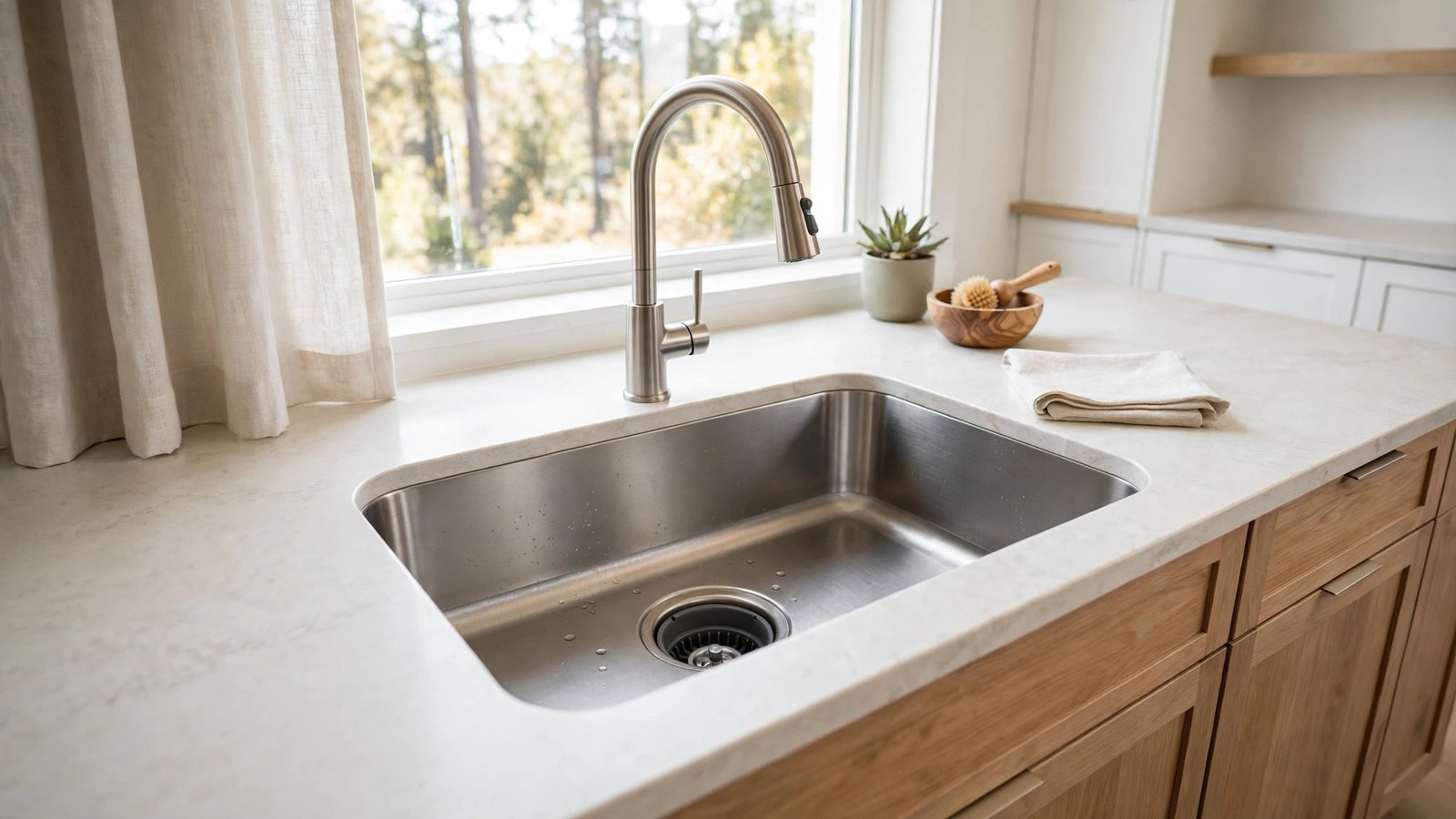
That smell is not your trash — it is your disposal
If your kitchen sink smells even when the trash is out and the dishwasher is clean, the garbage disposal is the usual suspect. The smell rarely means the unit is broken. It almost always means food residue is trapped somewhere the water does not reach — most often under the rubber splash guard at the drain opening, or in the upper grinding chamber.
Understanding where the smell lives is what makes the fix work. Pouring random cleaners down the drain treats the symptom for a day; cleaning the actual trap points solves it for weeks.
First, rule out the simple causes
Before you clean anything, check three things. First, run cold water for 30 seconds with the disposal on and nothing in it — sometimes the smell is just stagnant water in a disposal that has not run for days. Second, sniff the dishwasher drain hose area if your dishwasher connects through the disposal; a clogged dishwasher filter can send odors back up the same drain. Third, check for a slow drain: if water pools in the sink, the smell may be a partial clog, not surface residue, and that needs a different fix.
How to clean it safely, step by step
Step 1: Power off completely. Switch the disposal off at the wall switch and, to be fully safe, unplug it under the sink or switch off its circuit breaker before any hands-on cleaning. Never put your hand inside a disposal, even when it is off.
Step 2: Clean the splash guard. This is the step most people skip, and it is usually the main source of the smell. Lift the rubber flaps of the splash guard and wipe both the top and underside with an old toothbrush or sponge and dish soap. You will likely find a dark film of trapped food — that film is the smell.
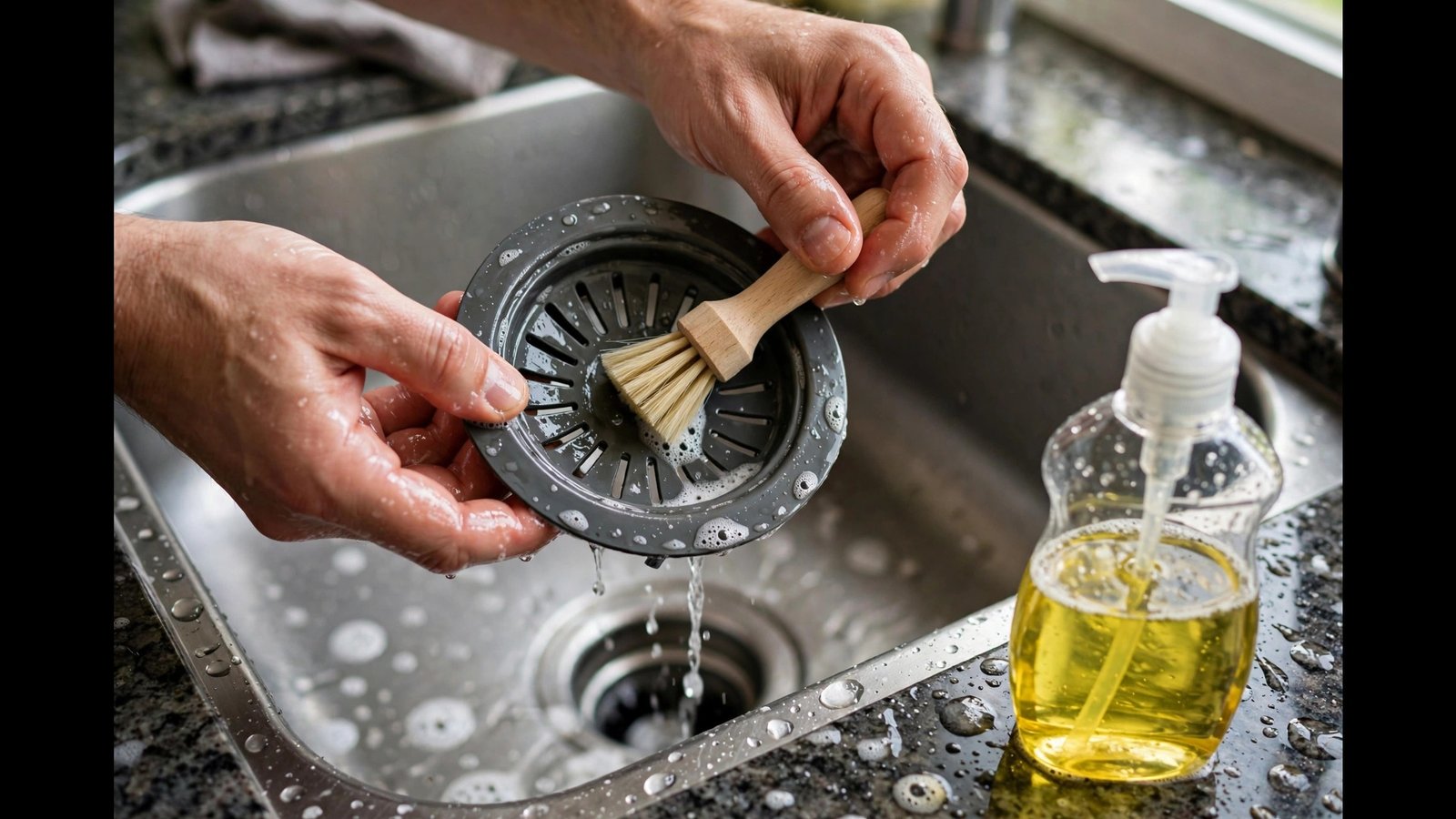
Step 3: Ice and citrus flush. Plug the power back in, run cold water, turn the disposal on, and feed in a tray of ice cubes followed by a few citrus peels (lemon or orange). The ice scours the grinding chamber walls, and the citrus leaves a fresh scent. Use cold water, not hot: cold water keeps fats solid so the disposal can grind and flush them, while hot water melts grease that later solidifies further down the drain.

Step 4: Dish soap scrub. With the disposal running and cold water flowing, squirt a small amount of dish soap in and let it run for 30 seconds. This cuts the grease film the ice loosened.
Step 5: Finish with a baking soda rinse. Pour half a cup of baking soda down the drain, follow with a cup of white vinegar, let it fizz for 10–15 minutes, then flush with cold water while running the disposal. This deodorizes the drain baffle below the unit. Note that this step alone, without the splash-guard scrub, rarely fixes a persistent smell — it is a finisher, not the fix.
What never to put down a disposal
- Grease, oil, and fat. They solidify in pipes and build clogs over time.
- Fibrous foods. Celery, onion skins, artichokes, and potato peels tangle or expand into a starchy paste.
- Coffee grounds and eggshells. Both accumulate in the trap and the pipes rather than flushing cleanly.
- Non-food items, obviously — but also bones and pits. They dull the mechanism and can jam it.
- Harsh chemical drain cleaners. They can damage disposal seals and splash back dangerously.
When the smell means a real problem
Call a plumber if you notice any of these: water leaking from the bottom of the unit, a jam that the reset button (the small red button on the unit’s underside) does not clear, a humming motor that will not spin, or a smell that returns within a day of a full cleaning. A fast-returning smell can indicate a leak trapping food under the unit or a deeper drain issue.
The maintenance habit that prevents it
Run the disposal with cold water for 20–30 seconds every time you use it, and run it with ice and citrus once a month. Keep the splash guard wipe in your monthly kitchen routine, alongside the dishwasher filter. That small habit is the difference between a disposal that smells every summer and one you never think about.
The bottom line
A smelly garbage disposal is almost never a death sentence for the unit. Clean the splash guard, flush with ice and citrus under cold water, and keep grease and fibrous food out of it. If the smell survives a full cleaning or comes with leaks or jams, that is when a plumber earns their fee.