

Halloween night is the one evening of the year when your front yard becomes a public attraction. Dozens of excited children — many in costumes that limit their vision, in the dark, on unfamiliar paths — will walk up to your door. That makes your home’s safety setup matter more on October 31 than on almost any other night. The good news is that most Halloween home accidents are preventable with a little preparation, and none of the fixes are expensive or time-consuming.
Here are 12 practical tips, organized from the street to your front door, so you can enjoy the night instead of worrying through it.

1. Light the path, not just the porch
A bright porch light is good; a lit path is better. Children trip on the walkway, not at the door. Use pathway lights, solar stakes, or string lights along the walk to show exactly where to step. Replace any burned-out bulbs before dark, and if your porch light is on a timer, make sure it switches on well before the first trick-or-treaters arrive — typically just before sunset.
2. Clear the walkway completely
Walk your own path in the dark before the night begins, and remove anything a costumed child could trip over: garden hoses, toys, plant pots, extension cords, loose stones, and low decorations. Move planters and yard art back from the path’s edge. A child in a long costume cannot see their feet well, so a clear, wide path is the single most effective safety measure you can take.
3. Skip real flames in pumpkins and lanterns
Open flames and excited children in flowing costumes are a bad combination. Use battery-operated LED candles inside carved pumpkins and paper lanterns instead of real candles. They look just as good from the street, they last all night, and they eliminate the fire risk entirely. The same rule applies to luminarias along the driveway — LED versions are cheap and reusable year after year.
4. Keep decorations out of the walking path
It is tempting to build a haunted walkway, but fog machines, fake spider webs at face height, and decorations that jut into the path create hazards. Keep the spooky effects to the sides of the yard, above head height, or behind a rope or border, and keep the actual walking route wide, flat, and free of surprises. Jump scares are fun; a child falling into a planter is not.
5. Secure pets before the doorbell starts
Halloween is stressful for pets. Constant doorbell ringing, strangers in costumes, and an open front door are a recipe for a bolted dog or a terrified cat. Keep pets in a back room with water, a bed, and something to chew, and put a sign on the door if needed. This protects both your pets and your visitors — even friendly dogs can nip when startled by a masked stranger.
6. Choose candy wisely and check the bowl
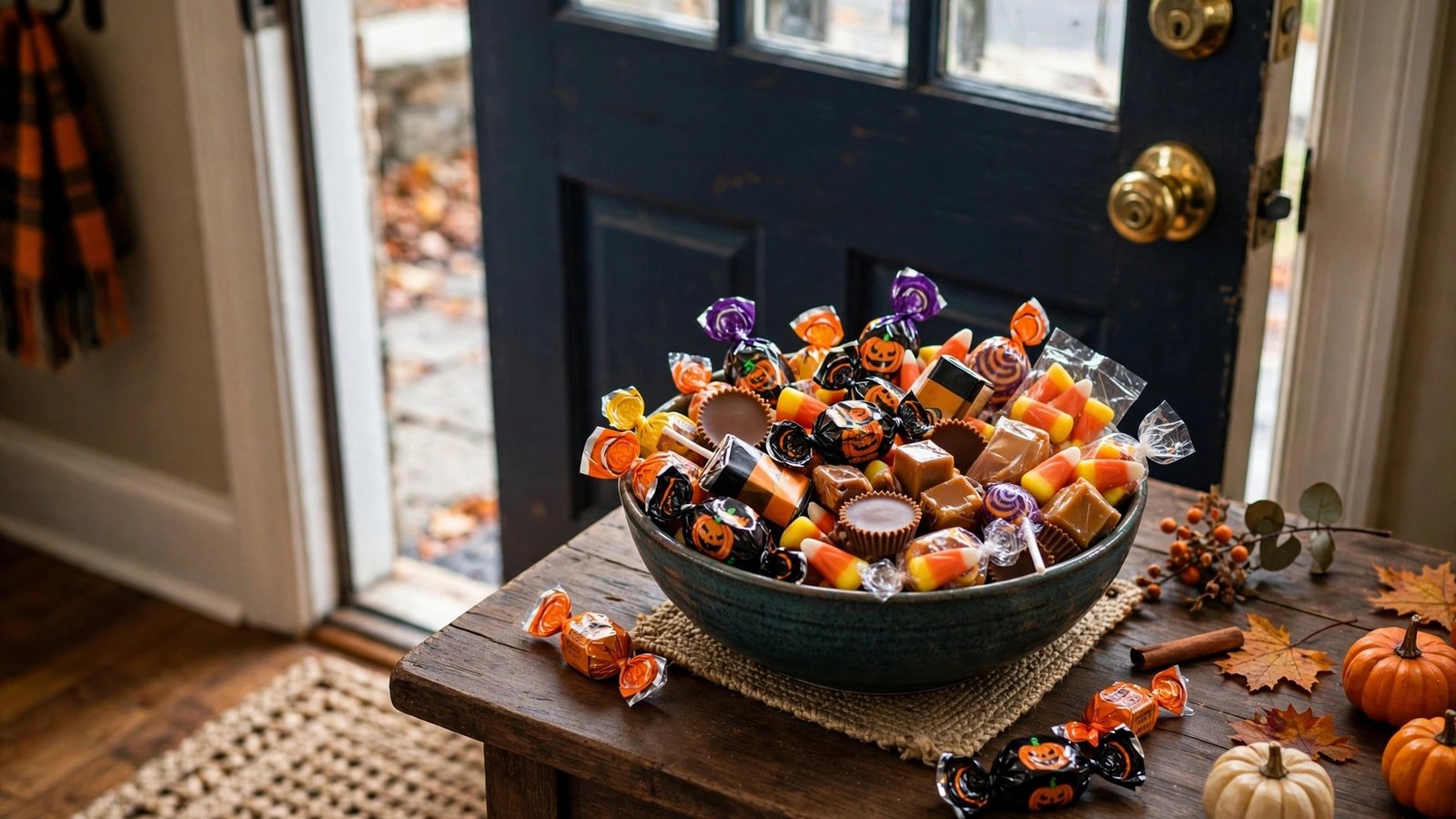
Buy factory-sealed candy from a store you trust, and skip homemade treats for strangers — most parents will throw them away anyway. Keep the candy bowl indoors or right at the door rather than leaving it unattended on the porch, which invites both over-grabbing and tampering. If you want to offer a non-food option for children with allergies, a small separate bowl of stickers or pencils is a thoughtful touch, and teal-painted pumpkins are the widely recognized signal for allergy-friendly houses.
7. Make your house visible to drivers
Halloween is one of the most dangerous nights of the year for pedestrians, especially children, because so much of the activity happens after dark. If your street gets trick-or-treat traffic, slow down if you are driving, and make your own property easy to see: reflective tape on steps, light-colored decorations near the curb, and a well-lit house number all help drivers spot where children are gathering. If you are driving on Halloween night, assume a child could dart out from between parked cars at any moment, and drive accordingly.
8. Check your smoke alarms and outdoor outlets
Before the decorations go up, test your smoke alarms — a house full of electrical decorations is a good reason to confirm they work. Outdoors, use only outdoor-rated extension cords and lights, keep connections off the ground and out of puddles, and plug into GFCI-protected outlets. If an outdoor outlet trips, find out why before resetting it; do not just tape over the problem and hope for the best.
9. Lock what visitors should not enter
On a night when strangers are walking up to your house, lock side gates, garage doors, and back doors. Trick-or-treaters should only ever need your front path and front door. Locking everything else is not unfriendly — it is basic, and it also protects you from opportunistic theft while you are distracted handing out candy at the front of the house.
10. If you are out trick-or-treating, make kids visible
If your own children are heading out, visibility is the priority. Add reflective tape to costumes and candy bags, give each child a flashlight or glow stick, and choose face paint over masks when possible so vision is not restricted. Agree on a route and a return time, and for younger children, an adult should walk with the group the whole way. Remind children to stay on sidewalks, cross only at corners, and never enter a stranger’s house or car, no matter what is offered.
11. Inspect candy before it gets eaten
When the night is over, go through the candy haul together before anyone eats anything. Throw away anything unwrapped, torn, or homemade from someone you do not know. This takes five minutes and it is the habit that turns a fun night into a safe one.
12. After the last visitor, do a quick shutdown
Once trick-or-treating winds down, bring in the decorations you do not want stolen or blown away, unplug outdoor lights and inflatables, and check that any real candles are fully out.
Halloween safety checklist
- Path lit from street to door, bulbs checked
- Walkway cleared of hoses, toys, cords, and loose stones
- LED candles in all pumpkins and lanterns — no open flames
- Decorations kept out of the walking route
- Pets secured in a back room
- Factory-sealed candy only; allergy-friendly options separate
- Smoke alarms tested; outdoor cords and GFCI outlets checked
- Side gates, garage, and back doors locked
- Children visible: reflective tape, flashlights, face paint over masks
- Candy inspected after the night ends; decorations unplugged and stored
Frequently asked questions
What time does trick-or-treating usually start?
It varies by town, but most neighborhoods see the first children just before or just after sunset, with the busiest window in the early evening. Check your town’s posted hours if it publishes them, and have your lights on before sunset regardless.
Are LED candles really as good as real ones in pumpkins?
From the street, yes — flickering LED candles look convincingly like flames, and they last all night without any fire risk. They are also reusable, which makes them cheaper over a few Halloweens.
What is the teal pumpkin?
A teal-painted pumpkin by the door signals that the house offers non-food treats for children with food allergies. It is a voluntary, widely recognized tradition — you can take part simply by keeping a small bowl of stickers or small toys beside the candy.
Do I need to worry about my decorations being a fire hazard?
Yes, especially with electrical decorations. Use outdoor-rated lights and cords, keep fabric decorations away from bulbs and heaters, and never run cords under rugs or through doorways where they can be pinched or tripped over.
The bottom line
Halloween safety at home comes down to three things: light the way, clear the way, and remove the flames. Do those three, secure your pets, and lock the doors nobody should use, and your house will be the one parents are glad their children visited. The best Halloween houses are not the scariest ones — they are the ones where every child gets home safe with a bag full of candy and a story to tell.
Leave a Reply