
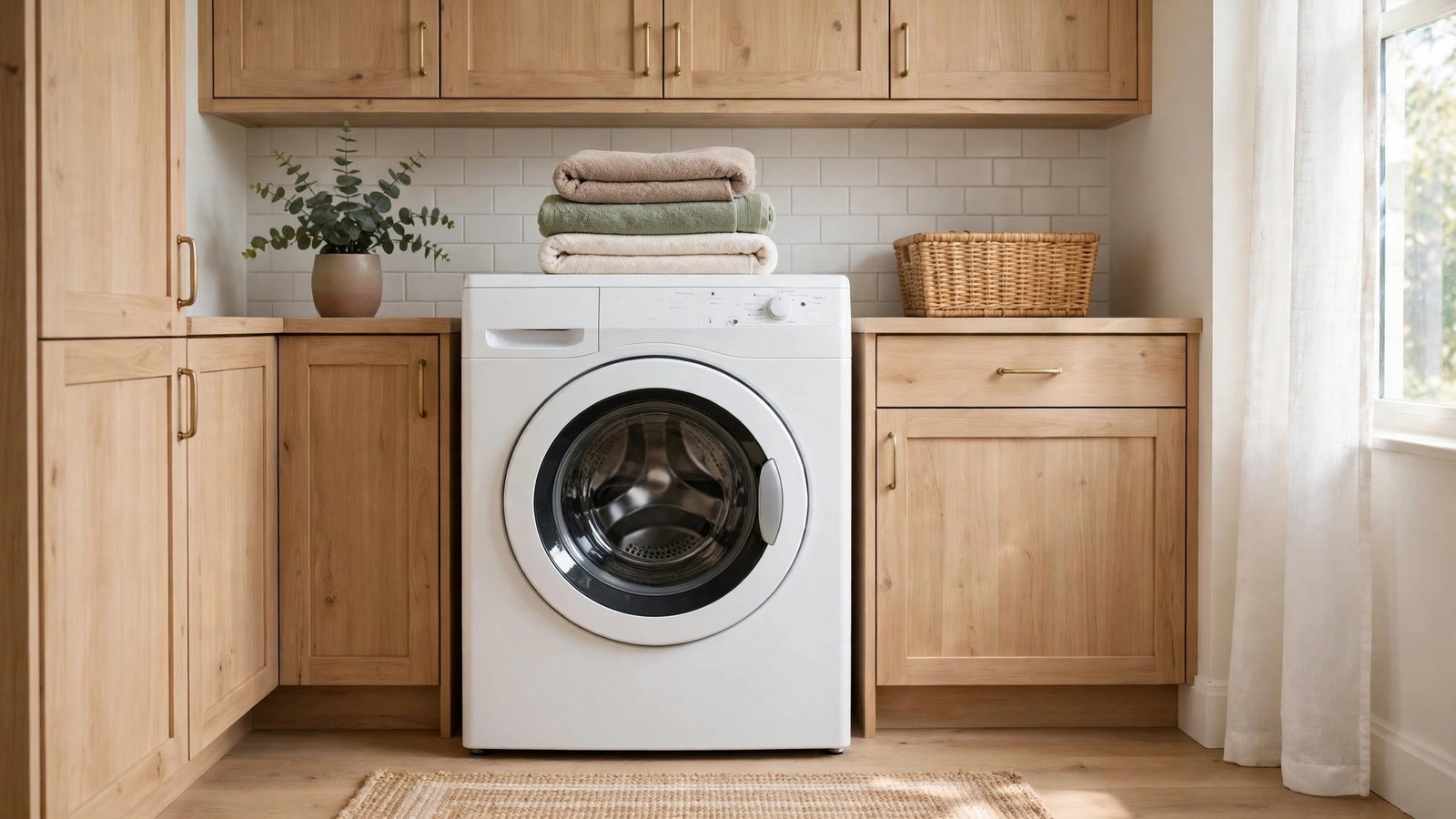
There is a special kind of panic that comes from hearing your washing machine sound like it is trying to escape the laundry room. One minute it is humming along; the next it is banging, rocking, and inching across the floor. In most cases, violent shaking has a short list of ordinary causes — and the first two on the list are things you can fix in minutes, with no tools at all.
The rule for diagnosing a shaking washer is to work from the outside in: start with the load, then the floor and feet, then the installation, and only then suspect parts inside the machine. Most washers never get past step two.
First, check the load
The most common cause of a shaking washer is an unbalanced load. During a high-speed spin, the drum spins fast to wring water out of clothes. If heavy items — a comforter, a bundle of towels, a load of jeans — clump on one side, the weight pulls unevenly and the whole machine rocks. A single heavy item washed alone is the worst case: there is nothing to balance it, so it swings the drum like a weight on a rope.
The fix is simple: pause the cycle, wait for the drum to stop completely, open the door, and redistribute the load evenly around the drum. Untangle anything that has balled up, spread heavy items out, and if one item is very heavy, add a couple of towels to balance it — or take it out and wash it with a fuller load later. Then restart. If the machine settles down, you have found your problem, and the lesson is to avoid single heavy items and overloaded drums in future.
Overloading deserves its own warning. A drum packed tight cannot distribute weight at all, and it also washes badly — clothes need room to move. As a rough guide, a top-loader should be about three-quarters full at most, and a front-loader should have a hand’s width of space at the top of the drum. If you have to push clothes down to close the door, take some out.
Energy Star’s clothes washer guidance also notes that right-sized loads wash better and use less water and energy.

Level the machine properly
A washer that rocks on its feet will shake no matter how balanced the load is. It is easy to test: stand in front of the machine and push firmly on two opposite corners in turn. If the machine rocks or one foot lifts, it is not level. Hard floors make this more likely — a small tilt on concrete or tile is enough to start a walk across the room.
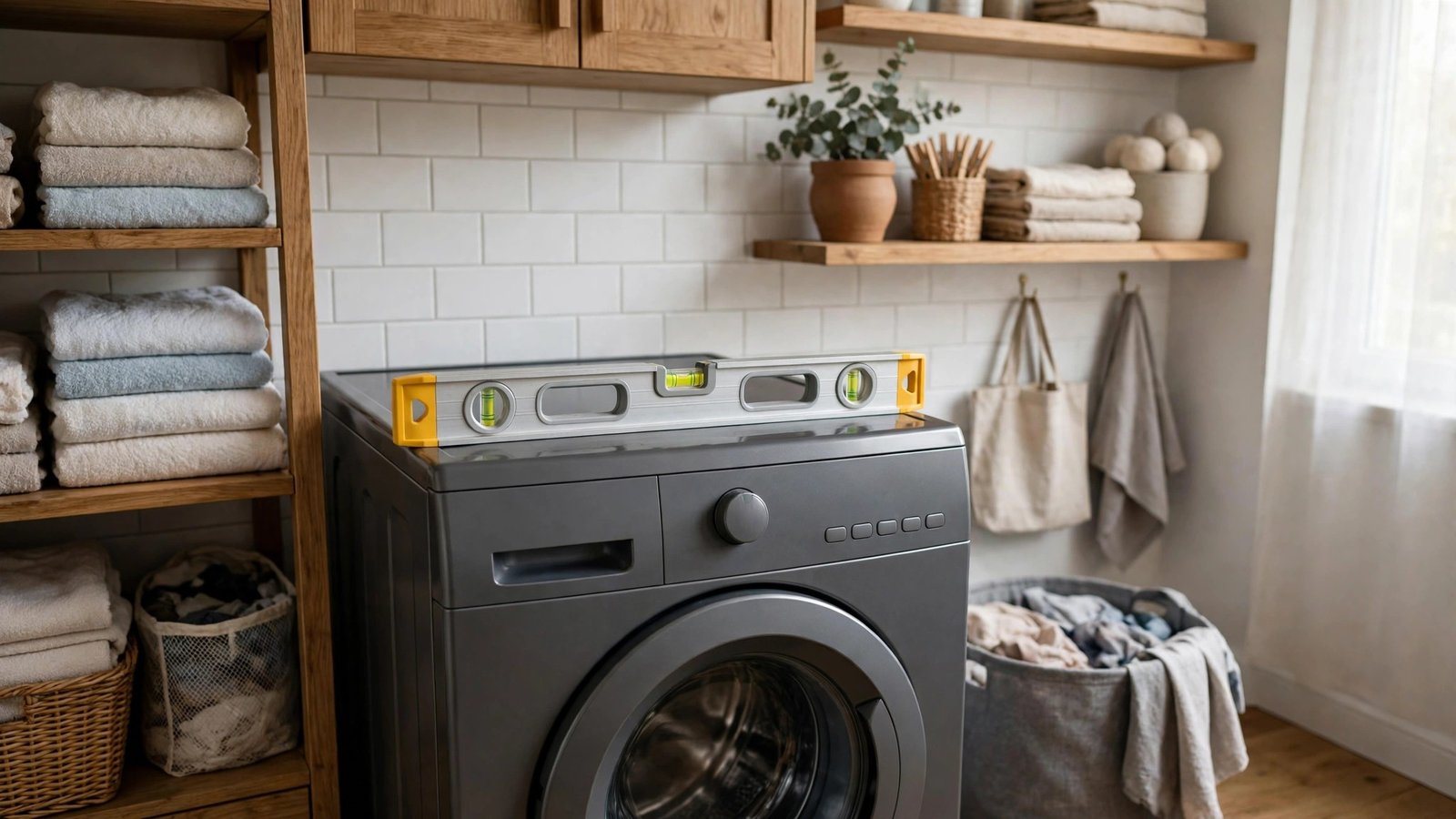
Levelling is a two-minute job. Reach underneath (or use a wrench on the adjustable feet) and turn the feet until all four sit firmly on the floor and the machine does not rock when you push it. Tighten the lock nuts so the feet cannot slowly turn back on their own. Put a spirit level on top of the machine, front to back and side to side, and keep adjusting until the bubble sits in the middle. Anti-vibration pads under the feet help on hard floors, but they are a supplement, not a substitute: a level machine on pads works; an unlevel machine on pads still walks, just more quietly. If the whole laundry area feels cramped while you work, organizing a small laundry room so it actually works makes every fix easier.
The new-machine suspect: shipping bolts
If a brand-new front-load washer shakes violently from its very first wash, check one thing before anything else: the shipping bolts. Manufacturers fit large bolts through the back of the machine to lock the drum in place during transport. They must be removed before the first wash — the manual says so, in bold, and yet this is one of the most common installation mistakes. A machine run with its bolts still in cannot move the way it is designed to, so it shakes hard and can damage itself.
The bolts are at the back, usually four of them, and they come out with a wrench. Keep them somewhere safe: if you ever move house, you will need them again to lock the drum for transport. If you have already run several cycles with the bolts in, mention it to a technician when you call — the machine may need checking even after the bolts come out. Your washer’s manual shows exactly where the bolts sit on your model — LG’s support pages walk through removing them before first use.
When it is inside the machine
If the load is balanced, the machine is level, and the bolts are out — and it still shakes on normal loads — the problem is likely internal. The usual suspects are worn shock absorbers on a front-loader, stretched suspension rods or springs on a top-loader, or a worn drum bearing. A front-loader that has picked up a smell along with the shaking usually needs a deep clean as well — our guide to deep-cleaning a front-load washer covers the smell fix step by step. These parts absorb the drum’s movement; when they weaken, the drum moves too freely and the whole machine follows.
You can sometimes spot the signs: a drum that feels loose or off-center when you push it by hand, a machine that bangs even when running empty, or a grinding or roaring noise during spin that sounds like metal on metal. These are repair signals, not DIY jobs for most people. Opening a washer involves springs under tension, electrical parts and water connections, and a wrong move can make things worse or unsafe.
Other warning signs that mean “stop using it and call a professional”: the machine moves repeatedly with normal, balanced loads; it leaks; it smells hot or electrical; it trips a breaker; or the drum sits visibly off-center when empty. A repair typically costs far less than a replacement machine, and catching a worn suspension early prevents the shaking from damaging hoses, flooring and nearby cabinets. Family Handyman’s guide to a shaking washer walks through the same outside-in diagnosis with photos.
What shaking can damage if you ignore it
A walking washer is not just noisy. Repeated movement stresses the water hoses behind the machine — the most common source of serious laundry-room flooding — and can loosen drain connections, crack floor tiles, and wear out internal parts faster. A machine that has walked far enough to kink a hose is a leak waiting to happen. That is why “it only shakes a bit” is worth fixing promptly: the fix is usually free, and the damage from ignoring it is not. The same vibration that stresses hoses can also loosen nearby connections over time, so it is worth checking the other appliances in the room — a water heater making popping or rumbling noises is a separate warning sign worth reading up on.
FAQ
Is a little vibration normal? Yes. A gentle hum and slight shudder as the spin ramps up is normal. Loud banging, hard rocking, or walking across the floor is not.
Can I wash a single comforter alone? You can, but expect balance trouble. Add a few towels to balance the load, use a lower spin speed if your machine allows it, and pause to redistribute if it starts thumping.
Do anti-vibration pads fix a shaking washer? They help a level machine stay put on a slippery floor. They do not fix an unbalanced load, an unlevel machine, or worn suspension parts.
When should I stop using the washer and call a technician? If it shakes violently with balanced, normal loads, bangs when empty, grinds, leaks, smells hot, or trips a breaker — stop and call. Continued use risks water damage and bigger repairs.
Putting it together
Start with the load, then the level, then the shipping bolts — in that order. Those three checks solve most shaking washers in under ten minutes. If the shaking survives all three, the machine is telling you a part inside has worn out, and a professional repair is cheaper than the water damage or replacement that comes from ignoring it. Either way, a washer that stays put is a washer that lasts longer.
Leave a Reply