
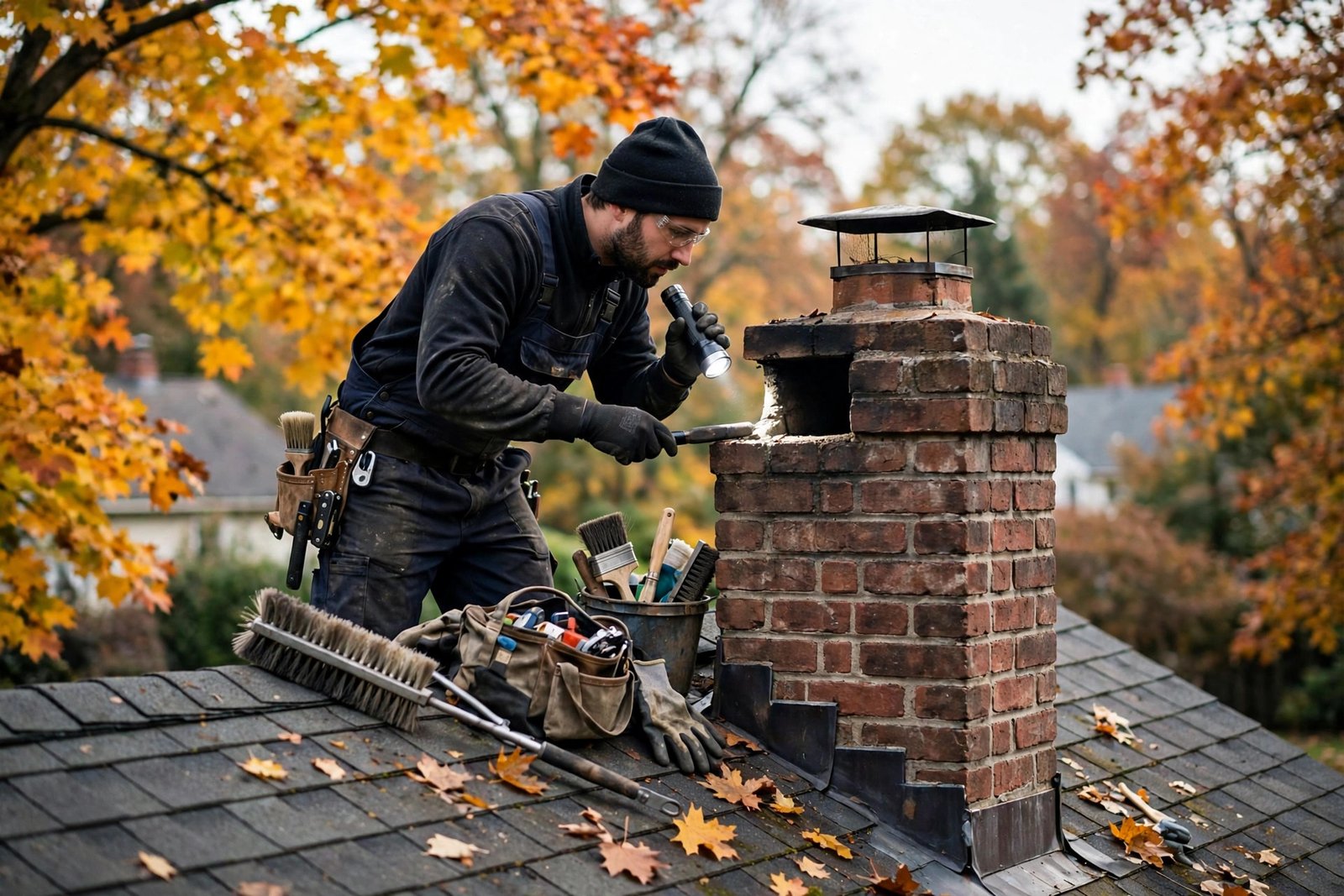
Few things feel better on a chilly evening than a crackling fire. Before you light the first one of the season, though, make sure your chimney is ready.
Over a heating season, burning wood leaves behind creosote — a flammable, tar-like residue that builds up inside the flue. Left alone, creosote can ignite into a chimney fire that burns hot enough to crack liners and spread to the house structure. Add in possible blockages from bird nests or fallen debris, cracks in the liner or masonry, and a damaged cap or flashing, and the first fire of fall becomes a genuine safety check, not a formality.
Fall is the ideal time to book an inspection, because sweeps fill up quickly once cold weather arrives. Here is what a proper inspection covers, and what you can check yourself. The chimney is one job on a longer fall list — see the complete fall home maintenance checklist for the other jobs worth finishing before the first freeze.

What creosote is — and why it matters
Creosote forms when wood smoke cools and condenses on the flue walls. It builds up fastest when fires burn cool and slow, when wood is wet or unseasoned, or when the flue is oversized for the fireplace. In its early stages it is flaky soot; at its worst it becomes a thick, glazed coating that is hard to remove and easy to ignite. A certified chimney sweep removes creosote with brushes and rods matched to your flue, and can tell you whether your burning habits are making buildup worse. Burning only dry, seasoned hardwood, keeping fires reasonably hot, and avoiding smoldering overnight burns all slow creosote formation. Never burn treated wood, painted wood, household trash or cardboard in large quantities — they add chemicals and deposits your chimney was not designed for. The Chimney Safety Institute of America certifies sweeps and sets the standard for what a proper inspection and cleaning should include — look for that certification when you book.
What a professional inspection covers
- Flue and liner — checked for creosote thickness, cracks, gaps and deterioration. A damaged liner lets heat and gases reach combustible framing.
- Blockages — bird nests, leaves, debris and even animals are removed. A blocked flue can push carbon monoxide back into the home.
- Firebox and damper — checked for cracks, rust and proper operation. A damper that will not close wastes heat all winter.
- Cap and crown — the cap keeps rain, snow and animals out; the crown is the concrete top that sheds water. Cracks in either let water into the masonry, where freeze-thaw cycles widen them each winter.
- Flashing — the metal seal where the chimney meets the roof. Failed flashing is a classic leak source that shows up as stains on attic ceilings.
- Exterior masonry — loose bricks, crumbling mortar and leaning stacks are flagged before they become structural problems. If your chimney has not been inspected in years, or you have just bought the home, ask for a more thorough inspection level — sweeps grade inspections by depth, and an older or suspect chimney deserves the deeper look. The National Fire Protection Association’s research on home heating equipment fires puts the scale in context: fireplaces and chimneys were involved in a small share of heating fires but caused a disproportionate share of the property damage — which is why the inspection matters even when the chimney looks fine from the ground.

What you can check yourself (from the ground)
You do not need to climb the roof to spot warning signs. From the ground and inside the house, look for: White staining (efflorescence) on exterior brick, which signals water moving through the masonry. Rust on the damper or firebox, suggesting water entry. A damper that sticks, or a fireplace that smokes into the room even with the damper open. Soot or a strong smoky smell when the fireplace is not in use, which can mean a blockage or downdraft problem. Crumbling mortar or bricks you can see from the ground. Any of these is a reason to call a sweep before lighting a fire, not after. And if you ever hear a loud roaring sound from the chimney, see flames or dense smoke coming from the top, or smell intense heat — treat it as a possible chimney fire: get everyone out and call emergency services.
After the inspection: burning habits that keep the flue cleaner
An inspection and cleaning reset the chimney, but what you burn afterward decides how fast creosote returns. The single biggest factor is the wood itself: burn only dry, seasoned hardwood that has been split and stacked under cover for at least six months. A moisture meter is cheap and removes the guesswork — wood under 20 percent moisture burns hot and clean, while wet wood smolders, cools the flue, and lays down creosote fast. A load that hisses or steams at the ends is too wet to burn.
Keep fires reasonably hot rather than damping them down to a smolder for the night. A slow, cool fire is the fastest way to coat a flue, and an overnight smolder is worse than a shorter, hotter burn followed by letting the fire go out. Build smaller fires more often instead of stuffing the firebox full and choking the air supply. Never burn treated or painted wood, plywood, or household trash: the chemicals add deposits the chimney was not designed for, and some release toxic fumes into the house. Keep the area in front of the fireplace clear, use a sturdy screen, and let ashes cool completely in a metal container placed outside, at least ten feet from the house, before disposal. Good burning habits do not replace the annual inspection — they stretch the time between cleanings and make each one cheaper.
Timing, cost and how to choose a sweep
Book in early fall, before the heating-season rush. Prices vary by region, chimney height and condition, so get a written quote that states whether cleaning is included or charged separately from inspection. A reputable sweep will show you photos or video of your flue before and after cleaning, explain any damage in plain language, and not pressure you into immediate major repairs on the spot — you should have time to get a second opinion on big-ticket liner or rebuild work. Look for certification and insurance, and be wary of door-to-door offers that claim urgent damage without evidence. A good sweep’s report is specific: creosote stage, liner condition, cap and flashing condition, and recommended next steps with priorities. Book before the cold weather arrives — our guide to preparing your home for winter storm power outages covers the rest of the heating-season preparation, including the emergency kit that belongs beside the fireplace tools.
Gas fireplaces need attention too
Gas fireplaces do not produce creosote the way wood does, but they still need an annual check. Vents can block, seals can fail, and carbon monoxide detectors are your backup, not your plan. If you have a gas fireplace, have it serviced as part of your fall heating check, and test your carbon monoxide alarms at the same time you test smoke alarms. Water getting into the masonry is a problem for gas flues as well — keep the gutters clear so rain is not pouring down the chimney stack, as covered in our guide to cleaning gutters before winter.
Book it before the first fire
A chimney inspection is a once-a-year job that stands between a cozy evening and a preventable fire. Book a certified sweep in fall, burn only dry seasoned wood, and keep smoke and carbon monoxide alarms tested. The first fire of the season should be a pleasure — and with a clean, inspected chimney, it will be.
Leave a Reply